
TLDR
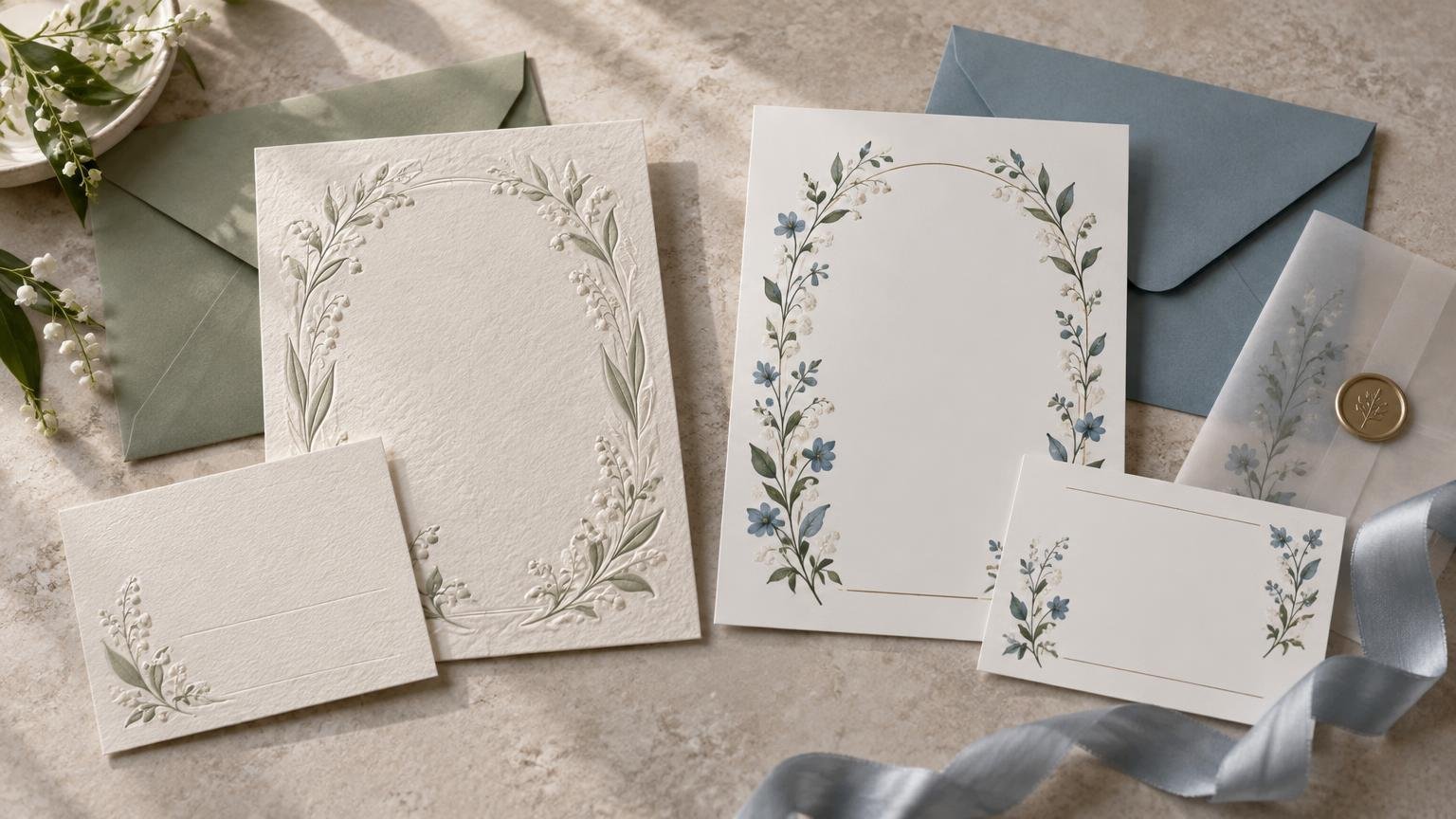
Choose letterpress when the recessed impression and tactile paper are central to the invitation design. Choose digital printing when you want a file-driven process suited to short runs, detailed personalization or a simpler production plan. Neither method is automatically better: the right choice depends on whether you value physical texture or production flexibility more.
Compare quotes using the same quantity, card size, paper, number of suite pieces, envelopes, finishing and shipping. Request a physical sample whenever texture matters, then confirm the complete production schedule before approving the order.
The essential difference
Letterpress is a relief-printing process. An inked, raised plate or type surface is pressed against paper. On a receptive stock, that pressure can leave the inward impression responsible for letterpress invitations’ distinctive feel. The technical definition is explained in the Etherington and Roberts printing dictionary.
Digital printing starts with an electronic file rather than raised type or a relief plate. HP describes Indigo as a digital, file-driven technology and identifies short-run, on-demand and variable-data work among its capabilities.HP Indigo technology overview
Letterpress should not be confused with embossing. A letterpress impression presses into the sheet, while embossing raises an area above the surrounding surface. Foil is another separate finish; it is not a synonym for letterpress or digital printing.
| Decision factor | Letterpress | Digital printing |
|---|---|---|
| Surface | A tactile impression pressed into receptive paper | A printed image whose feel depends mainly on the selected stock and finish |
| Production setup | Uses a raised plate or type surface | Runs from a digital file |
| Strongest reason to choose it | The physical impression is a major part of the design | You want short-run flexibility or a straightforward file-driven workflow |
| Paper decision | Confirm that the stock can accept the intended impression | Confirm that the stock, texture and finish are compatible with the printer’s digital press |
| Proofing priority | A physical sample is valuable because a screen cannot reproduce depth | Check color, fine type, alignment, trim and paper appearance |
| Timing | Obtain a process-specific schedule before ordering | Confirm proofing, production and shipping as separate stages |
Choose letterpress for texture, not merely for tradition
Letterpress earns its place when the impression contributes to the design. It works especially well for invitations built around restrained typography, line art, borders or other elements that benefit from being felt as well as seen. The process can make a minimal layout feel intentional without adding more decoration.
Paper is part of the result. Cotton stock is frequently associated with deep letterpress impressions because its fibers can receive and retain the pressure. One supplier, for example, limits its letterpress service to its own 300 gsm and 600 gsm cotton papers, but those weights are supplier-specific rather than universal requirements. Use a printer’s actual sample and stock list instead of assuming that every thick sheet will press in the same way.
The plate and press setup also make early proofreading important. Confirm names, dates, venue details and punctuation before production. A digital PDF can show content and placement, but it cannot reliably demonstrate how deep the impression will feel on the selected paper.
Choose digital printing for flexibility
Digital printing is the practical starting point for many wedding suites. Its file-driven workflow is well suited to short runs and can support variable information when a printer offers that service. It also allows couples to focus their budget and schedule on paper, envelopes, additional cards or a separate finish rather than choosing letterpress solely because it is considered traditional.
Digital does not mean that every invitation will look or feel the same. Smooth stock can support crisp fine type and clean layouts, while felt, eggshell and other textured surfaces change the tactile result. The broader guide to wedding invitation paper types explains how surface, weight, finish and printing method work together.
PrintInvitations currently identifies HP Indigo as its digital printing process. Its reviewed paper-and-print pages list smooth and textured stocks plus several finish options, but they do not identify letterpress as a current process. If you are ordering there, treat digital printing and the currently listed finishes as the available starting point rather than assuming that a letterpress upgrade can be added.
Compare total cost, not a single card price
A useful quote comparison must keep the specifications consistent. Ask each printer to price the same finished quantity, dimensions, paper, printed sides, envelope package and suite components. Add physical proofs, specialty finishes, shipping and any rush charges before deciding.
Order quantity should be based primarily on households or mailing addresses, not total guest count. Add extras for late additions, addressing mistakes, damaged pieces, keepsakes and a photographer’s detail shots. The wedding invitation cost guide covers the expenses that can disappear from an attractive per-card price.
Letterpress is easiest to justify when its impression is one of the first things you want guests to notice. Digital printing is usually the more practical place to begin when the design depends mainly on color, wording, layout or coordinated suite pieces. If you are considering a hybrid specification—such as digital printing with foil—ask for an itemized quote rather than treating every premium finish as part of the printing method.
Treat timing as a complete workflow
Do not compare a printer’s advertised production window with another supplier’s delivered date. Build the schedule backward through design, proof review, revisions, production, shipping, assembly, addressing and mailing.
Supplier timelines can differ substantially by process. Paperlust reports approximately 20 business days of production for its own letterpress and flat-foil products, but that is a supplier-specific schedule, not a general promise for letterpress orders. PrintInvitations states that most of its orders are produced in three business days or less, subject to factors including customization, proof approval, order size and seasonal demand. These figures describe different suppliers and should not be treated as a controlled speed comparison.
PrintInvitations says every order includes a free digital proof, with production beginning after proof approval. It also offers physical proofs and samples for a fee. Proof policies, revision limits and current turnaround should still be checked when ordering. Approval deserves a slow final reading because its policy generally does not make custom orders refundable for customer-supplied wording, spelling, address, quantity or approved-proof errors.
The printing method does not determine postage by itself
USPS evaluates a finished mailpiece by characteristics such as dimensions, shape, thickness, rigidity, address orientation and unevenness—not by whether the invitation was letterpress or digitally printed. A thick letterpress card can affect the assembled suite, but so can extra inserts, square envelopes, ribbons, closure devices and rigid embellishments.
USPS notes that square envelopes and certain rigid or uneven pieces may be nonmachinable. It also advises placing envelopes decorated with wax seals, string or ribbon inside another envelope for protection.USPS letter-mailing guidance Postal prices change, so weigh and measure one completely assembled invitation and verify the current classification before buying postage for the full batch.
What to request before ordering
- A physical sample printed on the proposed stock, especially for letterpress or textured digital paper
- A written quote showing quantity, card size, paper, envelopes, printed sides, finishes, proof charges and shipping
- The expected impression depth or a representative letterpress sample
- Confirmation that fine type, lines, gradients and colors suit the selected process
- A proof schedule plus production and shipping estimates stated separately
- The printer’s current correction, cancellation, reprint and damage policies
- A fully assembled sample that can be weighed and checked for postal compatibility
If the invitation is part of a larger set, decide whether every piece needs the same printing method. The main invitation can carry the tactile statement while RSVP, details and thank-you cards use a simpler process. The wedding invitation suite printing guide can help you decide which components belong in the package.
The practical verdict
Letterpress is the stronger choice when an inward impression on receptive paper is essential to the design. Digital printing is the stronger choice when you prioritize short-run flexibility, a file-driven workflow and straightforward coordination across several stationery pieces.
Make the final decision with samples and comparable quotes, not screen images alone. Verify the exact paper, proofing process, production schedule and finished mailing characteristics before approving the order. Those details will affect the result more than the prestige attached to either printing label.
References
- Etherington & Roberts. Dictionary–letterpress printing
- White Paper | The HP Indigo LEP / LEP* Technology
- Embossed Wedding Invitations: Letterpress & Flat Foil Guide – Paperlust
- Paper & Print Options – PrintInvitations
- FAQ – PrintInvitations
- Turnaround Time & Shipping – PrintInvitations
- Proofing & Personalization – PrintInvitations
- Refund and Returns Policy – PrintInvitations
- Quick Service Guide
- How to Send a Letter or Postcard | USPS