
By: Matt Mangham, Matt Jensen, Steve Cachero
If you are trying to figure out how to choose a cinematographer for your wedding, start by ignoring the prettiest 60-second trailer for a minute. A slick highlight reel can be great. It can also hide weak audio, uneven coverage, awkward pacing, and a person you do not actually want attached to your hip for eight or ten hours. What you want is a wedding film team whose style fits you, whose process makes sense, and whose work still holds up when you watch more than the best 90 seconds.
And yes, some people say videographer, some say cinematographer. I would not get hung up on the title. In real life, the better question is simple: can this person tell the story of your day in a way that feels like you? That means looking at style, personality, audio, contracts, backup plans, and actual deliverables. Not just vibes. Vibes are nice. Vows with clear sound are nicer.
https://printinvitations.com/wedding-invitations/
https://printinvitations.com/rsvp-cards/
https://printinvitations.com/save-the-dates/
https://printinvitations.com/wedding-thank-you-cards/
https://printinvitations.com/paper-print-options/
https://printinvitations.com/blog
How to choose a cinematographer for your wedding starts with style
Before you ask about price, ask what kind of wedding film you want to watch later.
Right now, most wedding film work tends to fall into a few broad styles: documentary, cinematic, traditional, storytelling, and vintage. Documentary coverage is more hands-off and captures the day as it unfolds. Cinematic work usually feels more polished and shaped, with music, speeches, and a stronger emotional arc. Traditional edits tend to be straightforward and chronological. Storytelling films lean hard into vows, letters, toasts, and narrative structure. Vintage coverage often brings in Super 8 or other nostalgic formats.
This matters because style affects almost everything else. It affects how much direction you will get on the wedding day. It affects the pacing of the final edit. It affects whether your film feels like a quiet record of the day or a crafted emotional piece.
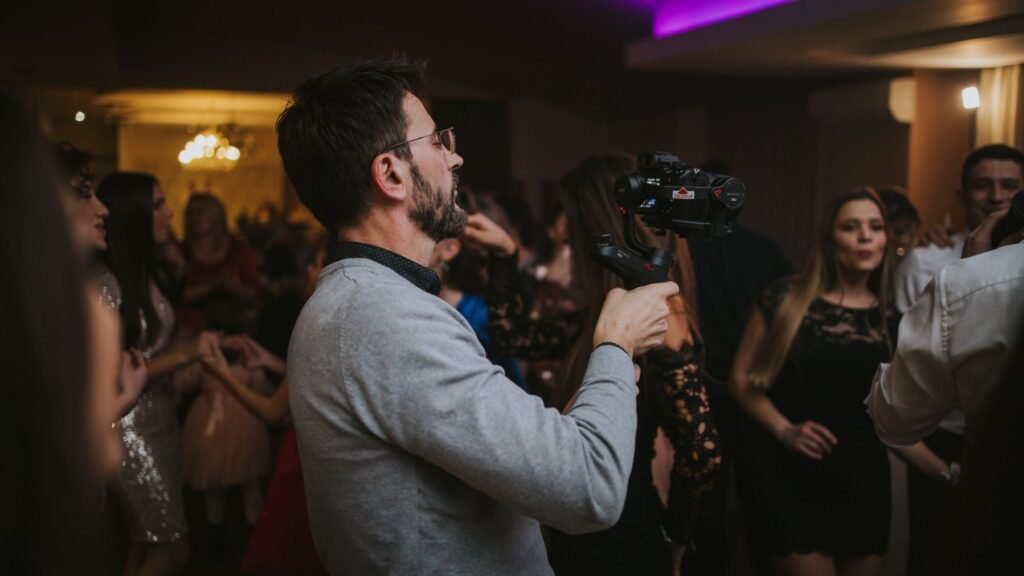
In my opinion, couples make this harder than it needs to be. If you hate being directed, do not book someone whose entire portfolio depends on posed movement and repeated takes. If you want something romantic and movie-like, do not book a purely documentary shooter and hope they suddenly become someone else. A good fit should feel obvious once you name the kind of experience you want.
Watch full wedding films, not just highlight reels
This is the part that saves people from bad decisions.
A highlight reel is the movie trailer. It is not the whole movie. And trailers are built to hide flaws. When you are comparing wedding cinematographers, ask to watch at least two or three full films or long-form edits, ideally from recent weddings. If they only want to show you short social clips, that is not enough.
Pay attention to boring things. Seriously. Look at ceremony audio. Can you clearly hear the vows and officiant, or does it sound like the microphone was taped to a potato? Watch how they handle dark receptions, mixed lighting, and fast transitions. Check whether the video drags in the middle, whether speeches feel natural, and whether the film still makes sense if you are not already emotionally invested in the couple on screen.
A strong cinematographer should also be able to show different deliverables. Maybe that includes a short highlight film, a full ceremony edit, full toast edits, a documentary cut, or even raw footage if they offer it. The point is not to ask for everything. The point is to understand what they are actually good at.
Audio, coverage, and backup plans matter more than fancy gear
Bad audio ruins good footage faster than almost anything.
Your wedding film is not just visuals. It is vows, speeches, reactions, and little bits of real sound that pull you back into the day. So ask direct questions. How do they record ceremony audio? Who gets mic’d? Do they record the officiant, one of you, both of you, and the toasts? Do they have separate audio backups?
Then ask about coverage. Will there be one shooter or two? Will they use a stationary camera during the ceremony? Do they carry backup cameras and extra cards? What happens if a card fails, a camera goes down, or the lead cinematographer gets sick? And after the wedding, how is your footage backed up?
These questions are not paranoid. They are practical. Wedding days do not come with reshoots.
A drone can be great, and sometimes it really does add something. But I would never choose a cinematographer for drone footage alone. A nice aerial shot of the venue is cool. Clear vows and steady ceremony coverage are cooler.
Compare packages like an adult, even if it is boring
The package details are where a lot of regret starts.
Wedding videography prices move based on coverage time, team size, experience, location, and what gets delivered after the wedding. A package that looks cheap can get expensive fast once you add longer coverage, a second shooter, full ceremony edits, drone footage, travel, or raw files. On the other side, a premium package may be worth it if it already includes the things you care about most.
This is also where how to choose a cinematographer for your wedding becomes less emotional and more clear. Put two or three quotes side by side and compare the actual scope. How many hours are included? Is the person you met the person who will film the wedding? Are you getting one short highlight, a longer film, full ceremony coverage, speeches, or none of the above? Is raw footage available? How many revisions are included? What is the delivery timeline?
Do not skip the contract. Read it. Then read it again when you are less excited.
You want clear language around payment dates, cancellation and rescheduling terms, overtime, travel fees, emergency replacement plans, revision policy, and delivery timing. Some pros turn work around quickly. Others take months. That does not automatically make one better than the other, but surprise is where resentment grows. A clear contract saves a lot of stress later.
And one more thing. If one quote is wildly lower than everyone else while promising everything under the sun, i would slow down. Sometimes a deal is a deal. Sometimes it is a warning wearing a discount sticker.
Personality fit is not a soft factor
You are going to spend a lot of your wedding day near this person.
That means personality matters almost as much as the portfolio. A talented cinematographer who makes you tense, self-conscious, or quietly annoyed is not actually a good fit. The best meetings usually feel easy. They listen. They answer questions directly. They can explain their process without sounding vague or slippery. And they seem to understand how much direction you want, not how much direction they prefer to give.
It also helps if your photographer and cinematographer can work well together. They do not need to be best friends, but they should not be fighting for the same corner during the first look or blocking each other during the ceremony. If they have worked together before, great. If not, ask how they usually coordinate with the photo team.
While you are getting the vendor side sorted out, it also helps to keep guest-facing details organized. A clear plan for your wedding website on invitations and practical dress code wording for wedding invitations can cut down on confusion while you focus on bigger vendor decisions.
The questions I would actually ask before booking
You do not need a 40-question interrogation. But you do need a few good ones.
- Can we watch two full wedding films and one recent ceremony or toast edit?
- How do you capture vows, officiant audio, and speeches?
- Will you personally film our wedding, and will there be a second shooter?
- What backup cameras, audio recorders, and file backup systems do you use?
- What exactly is included in this package?
- What is your turnaround time, and how many revisions are included?
- What happens if you are sick, delayed, or have equipment failure?
- Have you worked with our photographer or venue before?
If they answer these clearly and calmly, that is a very good sign. If they dodge, overtalk, or keep selling instead of answering, i would keep looking.
Final thoughts
How to choose a cinematographer for your wedding usually comes down to three things: style, substance, and trust.
Style is whether you actually love the kind of films they make. Substance is whether their audio, coverage, backups, package details, and contract hold up once you stop looking at the pretty parts. Trust is whether they feel like a steady person to have near you all day.
In my opinion, the biggest mistake is booking off a gorgeous trailer alone. Watch the longer edits. Ask the boring questions. Read the contract. Pay attention to how they communicate. The right choice should feel exciting, yes, but also solid. That is really how to choose a cinematographer for your wedding without crossing your fingers and hoping for the best.