
TLDR
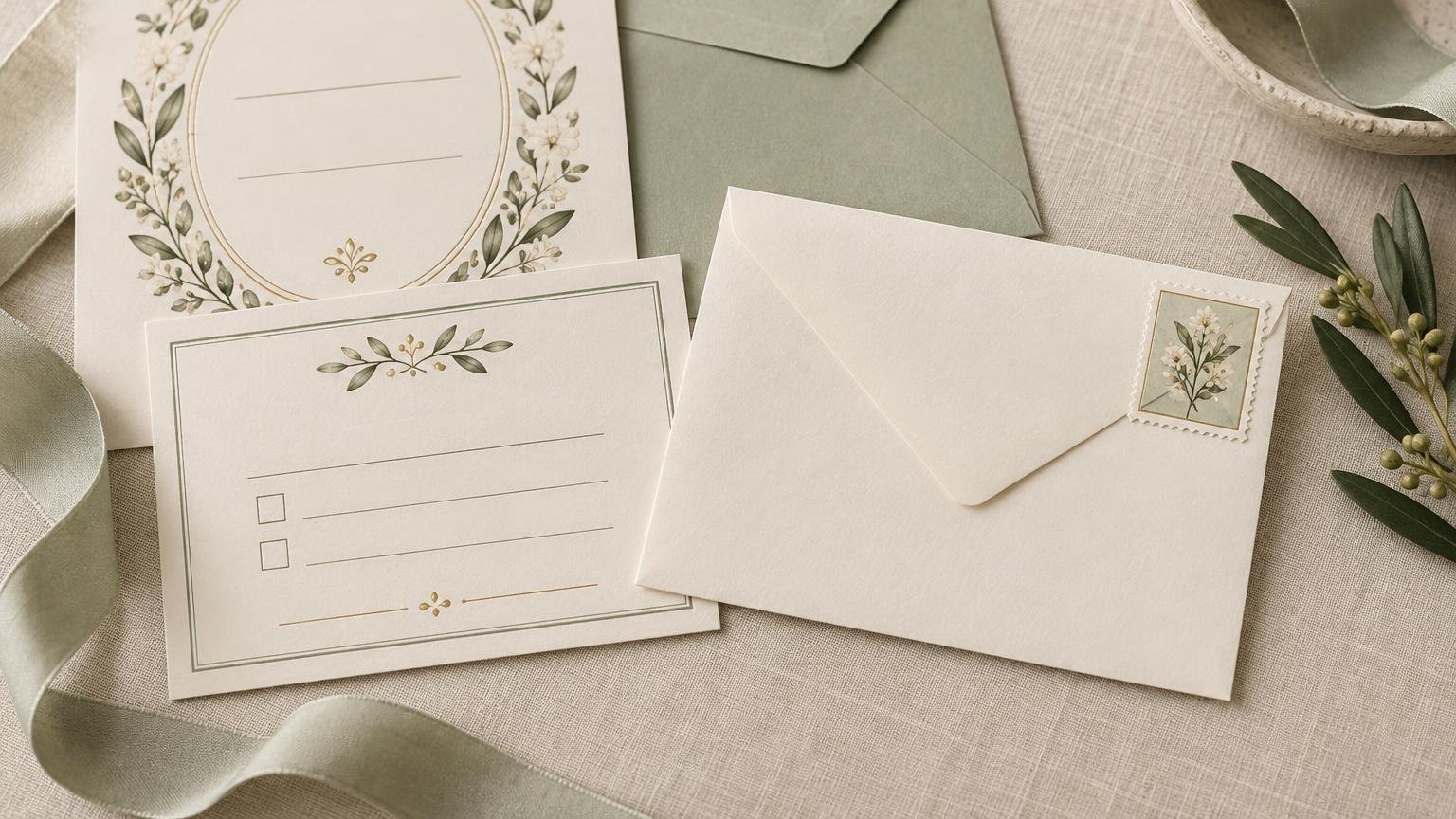
Yes. If guests are expected to mail back a wedding RSVP card, include a pre-addressed return envelope with the appropriate postage already attached. The stamp goes on the address side of the small RSVP return envelope, not on the RSVP card. The outer invitation envelope needs its own postage because it is a separate mailpiece. A postcard reply or online RSVP uses a different setup.
Stamp the return envelope before assembling the suite
For a traditional mail-in response, customary wedding etiquette is to make replying as easy as possible: provide the RSVP card, address the return envelope, and add its postage before placing both pieces in the invitation suite. Guests should only need to complete the card, place it in the envelope, seal it, and mail it.
The stamp belongs in the postage area on the address side of the return envelope. That envelope should already be addressed to whoever is collecting responses, such as the couple, a parent, or the wedding planner. The RSVP card itself does not receive a stamp.
This is separate from the stamp on the main invitation envelope. The outer envelope carries the invitation suite to the guest; the smaller reply envelope carries the completed RSVP back to the designated recipient. USPS treats them as separate mailpieces, so each needs the postage applicable to its own size, shape, and weight.
How much postage does an RSVP envelope need?
A conventional rectangular RSVP card and return envelope will often qualify for ordinary letter postage, but do not choose a stamp solely by looking at the envelope. USPS bases First-Class Mail letter postage on the finished mailpiece’s size, shape, and weight. A Forever stamp covers the current price for a qualifying one-ounce domestic letter; a mailpiece that falls into a higher price category needs additional postage. Check the current rules on the USPS First-Class Mail page.
USPS letter-size mail must be rectangular, at least 5 inches long by 3.5 inches high and 0.007 inch thick, and no more than 11.5 inches long by 6.125 inches high and 0.25 inch thick. A piece outside those limits may fall into another mail category. The official USPS letter-size standards provide the current dimensional rules.
Check the outgoing invitation separately
Correct postage on the RSVP envelope does not tell you how much postage the outer invitation needs. The invitation envelope may contain the main card, reply card, return envelope, details card, liner, and other pieces. Cardstock, inserts, dimensions, shape, embellishments, and uneven thickness can all affect the mailing price.
Assemble one complete suite exactly as guests will receive it, including every enclosure and decorative element, and have that finished sample checked. The wedding invitation postage guide explains why a single stamp should never be assumed for a multi-piece suite.
When you do not need to stamp a return envelope
You do not need a stamped RSVP return envelope when there is no envelope-based reply. Common alternatives include an RSVP postcard or an online response form.
RSVP postcard
A reply postcard travels without a separate return envelope and follows postcard postage rules rather than letter-envelope rules. It still needs postage if you expect the guest to mail it back. Use the current domestic postcard price in USPS Notice 123 rather than applying a letter rate automatically.
Online RSVP
If all responses are collected through a website, no return postage is needed. Make the web address or QR code easy to find and provide a clear response deadline. A well-placed wedding invitation QR code can reduce typing, but the printed instructions should still say what guests are expected to do.
Some couples offer both online and mail-in responses. In that case, stamp every return envelope you include. Giving guests two response methods does not remove the postage requirement from the paper option.
How many stamped RSVP envelopes should you prepare?
Count invitations by mailing household, not by total guest count. A couple or family receiving one invitation generally needs one RSVP card and one return envelope. If you are mailing 85 invitation suites, plan for 85 stamped return envelopes, plus a few extras for addressing mistakes, damaged pieces, late additions, and keepsakes.
Buy stamps only after confirming the reply-envelope format and quantity. This prevents paying for letter postage when you ultimately choose postcards or purchasing standard postage for an envelope that needs a nonmachinable surcharge.
RSVP envelope assembly checklist
- Choose a reply card and envelope that fit together without bending or crowding.
- Print or write the return recipient’s name and complete mailing address clearly.
- Place the applicable postage on the address side of each return envelope.
- Confirm that the reply card fits comfortably inside the envelope.
- Add a clear RSVP deadline and readable response fields to the card.
- Insert the unsealed return envelope and reply card into the invitation suite.
- Assemble one complete outer envelope and have its postage checked separately.
- Order a few extra wedding RSVP cards and envelopes for mistakes or guest-list changes.
The practical answer
If you want a guest to return a wedding RSVP by mail, provide the stamp. Pre-addressing and pre-stamping the reply envelope is customary, considerate, and less likely to delay responses. Before assembling the full batch, verify the completed return piece and the completed outer invitation separately. That small check protects you from insufficient postage, returned mail, and a last-minute reassembly job.