
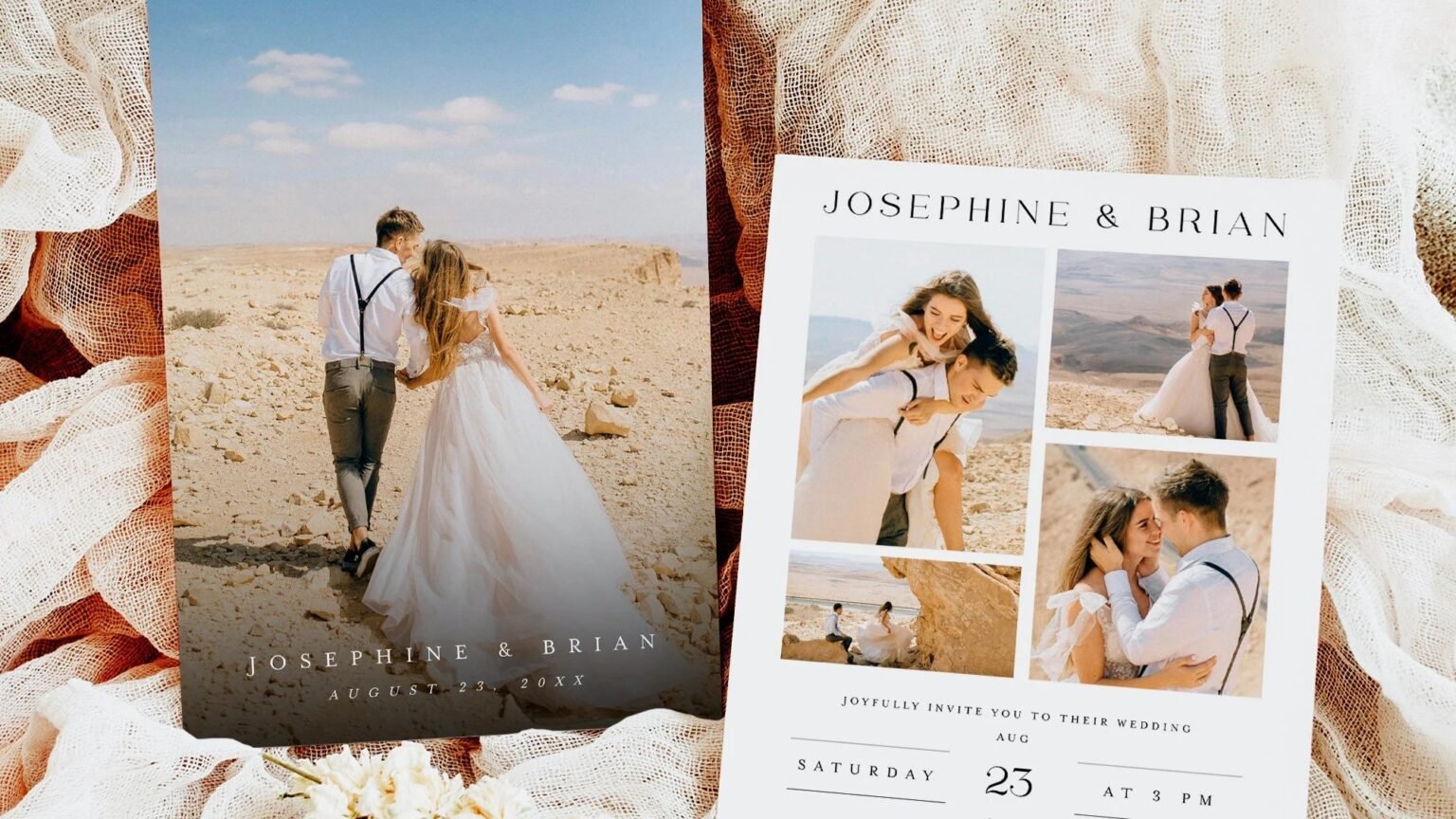
Wedding invitation postage sounds simple until the suite is actually assembled. The main card feels light enough. Then you add the RSVP card, the reply envelope, the details insert, the liner, maybe a wax seal, and suddenly one stamp feels less like a plan and more like a guess.
That is why wedding invitation postage stresses people out. They want a neat answer. The real answer is that wedding invitation postage depends on weight, size, shape, stiffness, and how decorated the envelope is. In my opinion, this is one of the least glamorous parts of wedding planning, but it is also one of the easiest problems to prevent before it gets expensive.
Why wedding invitation postage gets tricky fast
A basic rectangular letter is easy for the postal system to handle. A wedding suite often is not. Even a simple invitation can become a different kind of mail once you add thick paper, a second envelope, multiple inserts, or anything bulky on the outside.
People also tend to assume postage is mostly about weight. Weight matters, yes. But wedding invitation postage is also affected by the way the piece moves through the mail. A square envelope, a rigid card, a lumpy seal, or a strange closure can change the way USPS classifies the piece.
That is why two invitation suites that look pretty similar on a desk can mail very differently. One may travel like a normal letter. The other may need extra postage, hand-canceling, or a totally different approach. This is also why so many couples get caught off guard at the post office. The invitation looked fine at home. The mail system has other opinions.
What usually changes wedding invitation postage
The first thing that changes wedding invitation postage is shape. Rectangular envelopes are the easiest path. Square envelopes look polished and memorable, but they are one of the most common reasons couples need extra postage. If you choose square, do it because you love the look, not because you assume it mails the same way.
The second factor is weight. A single invitation card may not weigh much, but a full suite adds up fast. One RSVP card may not seem like a big deal. Add the reply envelope, a details card, a thick main card, and an envelope liner, and the total changes quickly.
The third factor is stiffness. Heavier cardstock can feel great in hand, but stiffness affects how the piece travels. If the envelope does not bend easily, it may not behave like standard letter mail. Pocket folds, thick inserts, acrylic accents, and layered wraps can push things in that direction too.
The fourth factor is anything awkward on the outside. Wax seals, string ties, clasps, ribbon, and bulky decoration can all create mailing problems. This is one of those places where a nice detail can become an annoying detail in about five seconds.
A simple rule helps here:
A flat rectangular suite with no outside embellishment is usually the easiest thing to mail.
A square, rigid, thick, or decorated suite is the kind you should assume needs extra attention.
That is not glamorous advice, but it saves money.
What happens with common invitation setups
A flat rectangular invitation with one or two thin inserts may still fall into regular letter territory, or it may only need a little extra postage. A lot of modern suites land here, especially if the paper is balanced and the envelope is standard.
A square invitation is different. Even when the contents seem light, the shape alone can change the postage story. This is one of the classic cases where couples assume one stamp will do the job and then learn otherwise after the fact.
A heavier formal suite can also change things fast. Thick cover stock, multiple inserts, double envelopes, and liners all sound reasonable on their own. Put them together and the piece may no longer behave like ordinary letter mail.
And if you have multiple versions of the invitation, do not assume they all need the same postage. The version with a details card, welcome event insert, or second enclosure can weigh and handle differently from the simpler version. That sounds tedious because it is. But it is still better than returned envelopes.
How to figure out wedding invitation postage the right way
The best method is also the least exciting one. Assemble one complete invitation exactly the way it will go into the mail. Use the real envelope, the real cards, the real liner, the real seal, and the real address formatting.
Then take that finished piece to the post office. Ask them to weigh it. Ask whether it qualifies as a standard letter. Ask if it is machinable. And if your suite has any unusual detail at all, ask whether it needs special handling.
That single test answers the question you actually care about. Not what your invitation might cost. What your invitation does cost in its final form.
I also think it is worth mailing one sample to yourself before you drop the full batch. If it arrives bent, scuffed, split, or looking like it had a rough week, you can still change course.
And while you are doing that final mailing pass, it helps to review Return address etiquette for wedding invitations and Do you seal the inner envelope of a wedding invitation?. Those are small envelope choices that become surprisingly important once the invitations are actually moving through the mail.
Wedding invitation postage mistakes to avoid
The first mistake is weighing only the main card instead of the finished suite. Postage is based on the actual mailpiece, not the design file in your head.
The second mistake is thinking extra stamps solve every problem. Extra postage can help with weight. It does not magically fix square shapes, rigid mail, or awkward closures.
The third mistake is putting decorative elements on the outside envelope without checking what they do to handling. A wax seal on a belly band can be smart. A wax seal exposed on the outside envelope can be a headache.
The fourth mistake is forgetting the reply envelope. It is small, but it still adds paper, weight, and bulk. Wedding invitation postage often changes because of several small additions, not one huge one.
The fifth mistake is waiting until the day before mailing to figure everything out. That is when people guess. Guessing is how nice stationery becomes a budget leak.
My simple rule for wedding invitation postage
If your suite is flat, rectangular, and fairly light, wedding invitation postage is usually manageable. If it is square, bulky, rigid, or decorated on the outside, assume it needs more attention from the start.
That does not mean you need to strip all personality out of your stationery. It just means the best-looking suite is the one that survives the mail and reaches guests intact.
Wedding invitation postage is one of those details that feels small right until it is not. One complete test invitation, weighed at the post office before the full mailing, gives you a real answer instead of a hopeful one. And honestly, that is the whole job here. Get the suite right, stamp it correctly, and move on to something more fun.