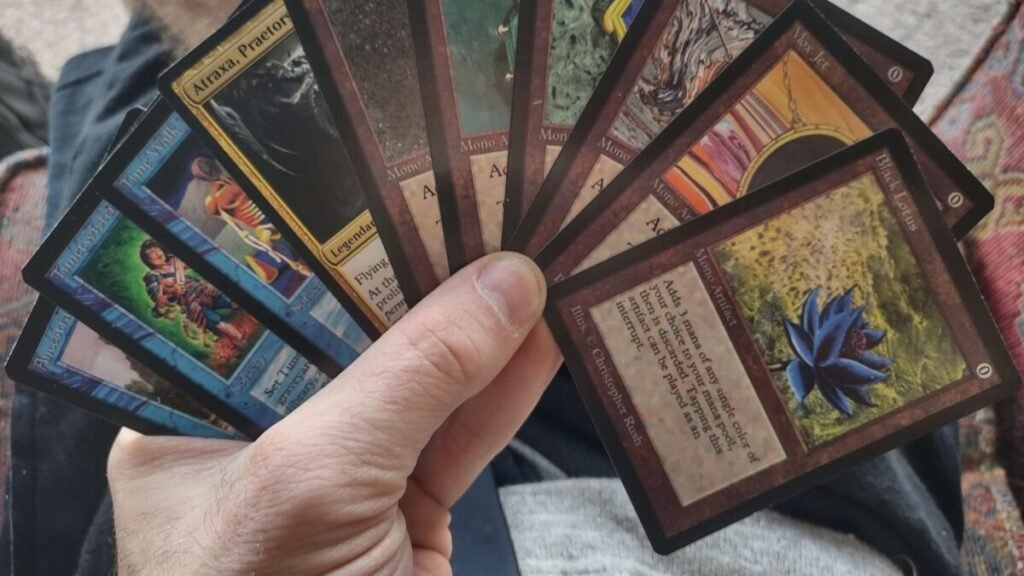
“The best proxy is the one you stop thinking about once it’s sleeved.”
That’s basically the whole market in one sentence. Most people don’t want a proxy that’s almost readable, sort of the right size, and kinda shuffles. They want a play piece that looks clean, feels consistent, and doesn’t turn game night into “hold up, what card is that?”
PrintMTG.com sits in a very specific lane: print-on-demand MTG proxies with a decklist-first workflow, a consistent materials promise, and very “grown-up” policies around quality and shipping. It’s not trying to be the most realistic replica shop on earth. It’s trying to be the easiest path from “I have a list” to “I have a sleeved deck that feels normal.”
Let’s break down where that fits in the market.
The MTG proxy market has three main lanes
If you strip away the drama and the hot takes, most proxy options fall into one of these buckets:
1) DIY bulk printing (cheap, but you do the work)
This is the MPC + MPC Autofill world. You can get excellent results for the money, but you’ll deal with formatting, bleed, images, and an ordering flow that feels like filing taxes.
2) Storefront “high realism” sellers (amazing-looking singles, higher cost)
This is the ProxyKing lane. You buy specific cards that are meant to look extremely close. Great for blinging staples. Less great for printing a full 100-card deck on a budget.
3) Print-on-demand proxy printers (you bring a list, they print)
This is where PrintMTG.com lives. The product isn’t “one perfect replica.” It’s “a consistent deck experience.”
That third lane has been growing fast because it matches how Commander players actually behave:
- you brew constantly
- you tweak lists weekly
- you want the deck to shuffle cleanly
- you don’t want a file-prep side quest
Where PrintMTG.com fits
PrintMTG is positioned like this:
“Decklist to sleeves” printing, with consistent materials and predictable policies.
On their site, PrintMTG describes proxies meant to look great in sleeves for casual play and playtesting, with S33 black-core stock, a smooth/UV finish, and consistent cutting. They also explicitly say they’re not trying to create exact replicas (for example, they don’t add holo stamps).
That “close match, not a counterfeit replica” stance matters, because it explains why PrintMTG is often compared to MPC and other print services more than it is compared to the most realism-focused storefront sellers.
In other words:
- If your #1 priority is maximum replica realism, you usually shop storefront sellers.
- If your #1 priority is a clean, consistent deck experience, PrintMTG is in its element.
Workflow: decklist upload, set versions, and the MTG Card Maker
This is the part people either love or ignore.
Decklist-first ordering (the main value)
PrintMTG’s homepage flow is built around:
- paste/upload your decklist
- choose your set versions
- review quantities
- they print and ship
That’s a direct answer to the MPC problem. With MPC, you get power and flexibility, but the workflow is not “I have a list, print it.” It’s “I have a list… now I become a part-time production artist.”
PrintMTG also publishes guidance on supported decklist formats and common errors, which sounds boring until you’ve ever received an order with 97 cards because a sideboard line got interpreted weird.
Version picking (quietly important)
A lot of proxy printing headaches come from version chaos:
- you wanted the Retro border
- you got the modern frame
- you wanted the showcase
- you got the base art
PrintMTG makes “choose the set version” part of the core process. That’s a real market fit for players who care how a deck looks as a whole.
MTG Card Maker (the “I want it to look like my deck” tool)
PrintMTG also offers an MTG Card Maker where you can:
- choose frames/templates (modern, vintage, full art styles, etc.)
- edit card text and layout
- reposition art and preview live before ordering
This is a different value than “print me official-looking scans.” It’s for people doing:
- custom commanders
- themed alters
- joke cards
- cohesive deck aesthetics
- gifts
If you’ve used other card makers like MTG Cardsmith, this feels like the “print-ready” cousin. Instead of creating cards and then hunting for a print path, you can design and order in one place.
Print quality: stock, finish, and cutting consistency
PrintMTG repeatedly comes back to three physical things:
S33 black-core stock (the “real deck” feeling)
Black-core stock matters because it affects:
- stiffness (“snap”)
- opacity
- how the card feels in hand once sleeved
PrintMTG states they use S33 German black-core playing-card stock.
UV/smooth finish (shuffle feel and durability)
PrintMTG describes a UV satin / smooth protective finish. In proxy land, this is a big deal. A proxy can look great and still shuffle like sandpaper if the finish is wrong.
Consistent cutting (the easiest way to accidentally mark your deck)
Cut consistency is where “pretty proxies” become “good proxies.”
If sizes vary or corners feel off, you notice it immediately in a stack of 100. PrintMTG highlights consistent cutting and standard sizing as part of the product promise.
Quality guarantee (the part that signals seriousness)
PrintMTG publishes a clear Quality Guarantee that lists what “good” means in plain terms:
- sharp, readable printing
- consistent color and finish across the order
- clean cuts and uniform corners
- correct quantities/items
- packaging that protects the order
And they also state: if they mess up due to an error on their side, they’ll make it right.
This is one reason PrintMTG fits the “print-on-demand service” lane so well. A lot of proxy buying is built on vibes. PrintMTG is trying to run it like a real print shop.
Pricing: when PrintMTG is a good deal
PrintMTG uses tiered pricing that drops as quantity increases. Their proxy pricing page shows breakpoints like:
- $2.00 each for small batches (2–9)
- $1.50 each (10–49)
- $1.00 each (50–99)
- then lower as you go larger (100+)
This pricing model tells you exactly what they’re optimizing for:
- not “buy one ultra-realistic single”
- not “print 612 cards overseas for pennies”
- but “print a deck, a cube update, or a stack of staples with decent economics”
In plain English: PrintMTG makes the most sense when you’re printing enough cards to hit the better tiers. That usually means Commander decks, cube maintenance, or repeated deck iterations.
Shipping: speed, tracking, and “need it by a date”
PrintMTG frames delivery as “production time + transit time,” and on their site they say most orders are produced in about 2 business days and ship via USPS by default, with UPS 2nd Day and UPS Next Day options if you need a deadline.
They also call out tracking, and their shipping policy spells out what happens when something goes wrong (damage, delays, address issues).
This is a major reason PrintMTG fits the market. A lot of DIY options are great, but shipping can take time. A lot of ultra-realistic sellers have great product, but you’re paying premium per card. PrintMTG is trying to be the dependable middle: fast enough, consistent enough, and simple enough.
How PrintMTG compares to common alternatives
Here’s the cleanest way to think about it:
| Option type | Best for | What you give up | Where PrintMTG fits |
|---|---|---|---|
| MPC + MPC Autofill (DIY bulk) | Cheapest bulk printing with solid quality | File prep, formatting rules, longer shipping | PrintMTG is the “I don’t want homework” choice |
| PrintingProxies (speed-first POD) | Fast turnaround, simple ordering | Less emphasis (publicly) on process details than PrintMTG | PrintMTG leans harder into specs + policies |
| ProxyKing (storefront realism) | Maximum realism singles and premium treatments | Higher cost per card for full decks | PrintMTG is better for printing lists at scale |
| Not MPC / other US printers | Custom orders, different print styles | Varies by workflow and consistency | PrintMTG is more MTG-list-native |
| ProxyMTG (browse + order) | Picking specific versions by browsing sets | Less decklist-first for some users | Same “print-on-demand” lane, different shopping style |
This is why PrintMTG’s market position is strong: it’s the option you pick when you want to proxy like a normal human who has a decklist and a deadline.
Who should use PrintMTG
PrintMTG is a great fit if you’re in one of these situations:
- Commander playtesting: you’re iterating fast and want consistency
- Cube updates: you don’t want to reformat files every time a set drops
- Staples printing: mana bases, rocks, and “I’m not paying $60 for that right now” cards
- Aesthetic matching: using the Card Maker to keep a deck on-theme
- You care about policies: you want clear quality and shipping expectations
It’s less ideal if:
- you want the absolute cheapest bulk option and don’t mind file prep
- you want ultra-realistic singles with premium replica details (that’s the storefront lane)
FAQs
Does PrintMTG add holo stamps?
No. PrintMTG explicitly says they are not trying to create exact replicas and they don’t add holo stamps.
Can I print a single card?
Yes. PrintMTG states there are no minimums.
Do they print foils?
Their FAQ says foil proxy printing is coming soon, and they mention custom foil printing is available by reaching out (at higher cost).
How fast is production?
PrintMTG says most orders are produced in about 2 business days, with peak periods sometimes taking longer.
Can I upload my own art?
Yes. The MTG Card Maker is built for uploading art and customizing layouts before ordering prints.
Conclusion: PrintMTG’s market role in one sentence
PrintMTG.com is the “decklist-to-sleeves” print-on-demand option that sits between DIY bulk printing and premium storefront realism.
If you want to proxy a real deck with a consistent feel, and you want clear expectations around print quality and shipping, PrintMTG fits the market in a very practical way.
And honestly? Practical is what most proxy players are actually shopping for.