
TLDR
- No. If you are using double envelopes, the inner envelope is traditionally left open and slipped inside the outer envelope.
- The outer envelope is for the mailing process. It carries the full mailing address, postage, stamp, and return address.
- The inner envelope is for presentation and clarity. It helps the invitation suite stay cleaner and shows exactly which guests are invited.
- Before you mail the full batch, take one assembled sample to the post office and test the postage, size, weight, and any wax seal, ribbon, belly band, or other embellishments.
People search do you seal inner envelope wedding invitation because this is one of those tiny etiquette details that suddenly matters when wedding invitations stop being a design project and become a real assembly job. The date is set, the paper is printed, the suite is stacked, and now you have to decide what actually gets sealed.
The practical answer is simple. Do not seal the inner envelope. In a traditional invitation suite, the inner envelope stays open inside the outer envelope, and only the outer envelope is sealed for mail. That is still the standard method for formal invitations, and it is usually the easiest one for guests too.
What the inner envelope actually does
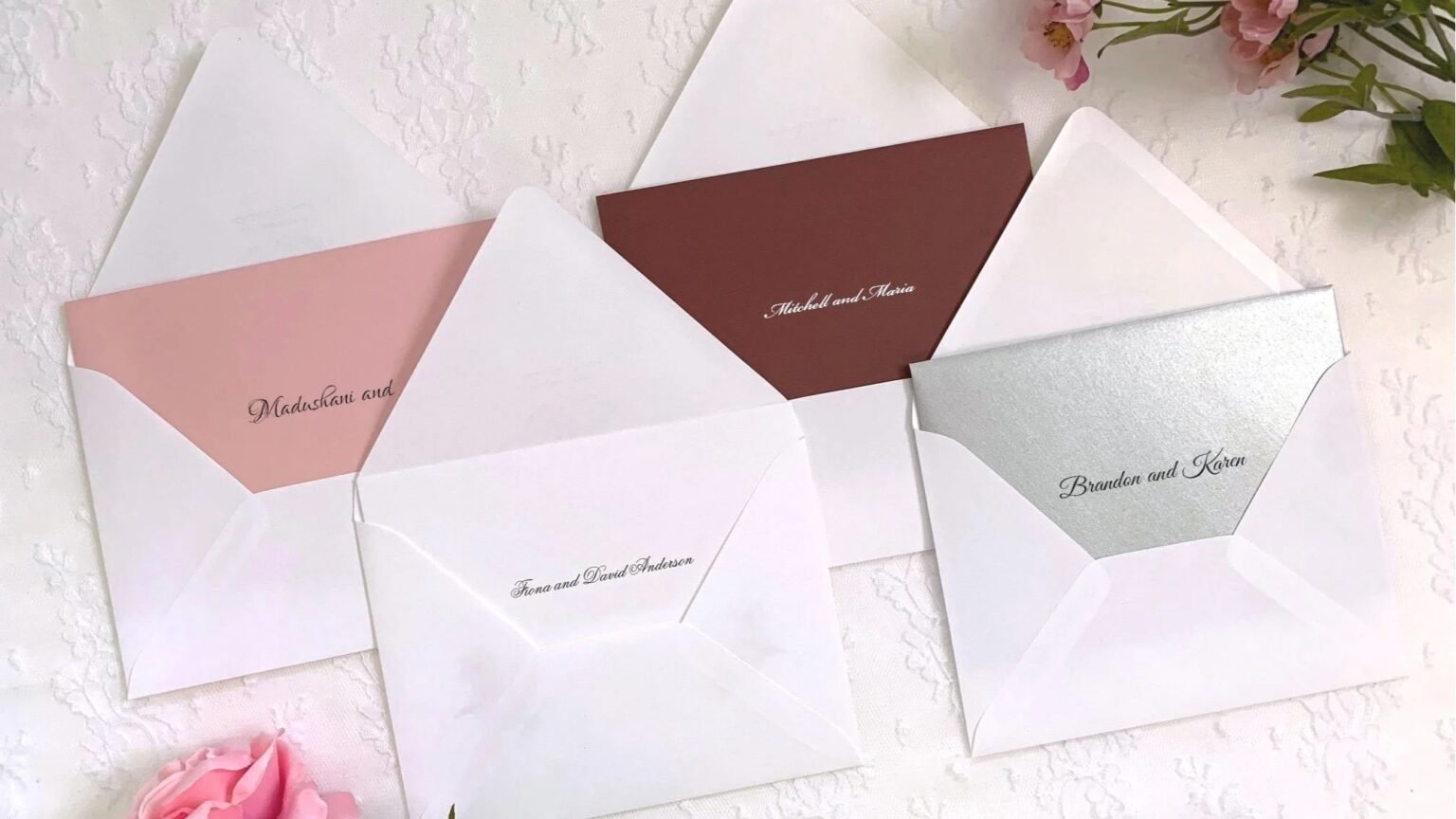
The inner envelope is the presentation layer inside the suite. It helps protect the printed pieces from scuffs during handling, and it tells guests exactly who is invited. That matters when one mailing address includes a married couple, an unmarried couple, children, or a plus-one.
It also creates a cleaner reveal. When guests open the outer envelope, the inner envelope is the first thing they see, not the stamp, barcode, or post office markings. That is one reason traditional wedding stationery often uses two envelopes.
If you are sending classic or more formal wedding invitations, an inner envelope still makes a lot of sense. If you are sending a simpler suite for family and friends, it may be optional.
What the outer envelope does
The outer envelope is the working layer of your wedding invitation envelopes. It carries the address, the full mailing address, the return address, the stamp, and the wear from the mailing process. It is the piece the post office reads, sorts, and marks.
That is why the outer envelope gets sealed and the inner envelope does not. The outer envelope has the delivery job. The inner envelope helps protect the suite, clarify the guest list, and help the cards arrive in better shape.
Traditionally, double envelopes were used so wedding invitations could reach guests in more pristine condition. That reasoning still holds up. But today it is a choice, not a requirement.
So, do you ever seal the inner envelope?
Usually, no.
The inner envelope is meant to sit open inside the outer envelope. Sealing it does not really improve the suite. It mostly adds one more step for the recipient and one more chance for the paper to wrinkle, tear, or stick.
If you are using double envelopes, leave the inner envelope unsealed, slide it into the outer envelope, and seal only the outside layer. That is the traditional answer, and in our view it is still the best practical answer.
Modern wedding invitations often skip the inner envelope altogether. That is fine too. Many couples use one outer envelope instead of two envelopes, especially for a lighter invitation suite, a more casual wedding, or a single card invitation. But if you are using an inner envelope, the standard rule is the same: leave it open.
When an inner envelope is worth using
An inner envelope is worth using when you want a more polished presentation, when your guest list needs clarity, or when your suite includes several pieces.
It is especially useful when:
- one address includes more than one person
- you need to list children’s names
- you are inviting a married couple and their children
- you are inviting an unmarried couple at the same address
- you want to note “and Guest” without crowding the outer envelope
- you want the suite to arrive in more pristine condition
If none of that applies, one outer envelope may be enough. A single card invitation with a response envelope or website RSVP option is often simpler to assemble, easier to stamp, and cheaper to mail.
How to assemble the invitation suite
This is the part where a few careful tips save time.
Start with the main invitation on the bottom, print side up. Then place any enclosure cards on top in size order, usually from largest to smallest, with the smallest insert on top. A reception card, details card, or accommodations card can sit above the main invitation.
If you are including an rsvp card and reply card envelope, place them near the top. Response cards should be easy for guests to see right away. If the response envelope is part of the suite, put the reply address on it before you start the full assembly process.
If you are using an envelope liner, install that first. Then slide the assembled invitation stack into the inner envelope. Leave the inner envelope open. After that, place the inner envelope inside the outer envelope.
For a single card invitation, the left edge goes in first. For a folded invitation, the folded edge goes in first. That way, when guests open the envelope, the printed front of the invitation is facing them correctly.
If you are wrapping the suite with a belly band, ribbon, or vellum wrapping, keep it neat and light. A beautiful suite still needs to survive the trip through the mail.
How to address the inner envelope and outer envelope
The inner envelope and outer envelope are addressed differently on purpose.
The outer envelope gets the full mailing address. In more formal wedding invitations, that usually means titles, full names, and a complete address. The inner envelope usually drops the street lines and focuses only on the invited people.
Here are simple examples.
Married couple
Outer envelope: Mr. and Mrs. Daniel Harper
Inner envelope: Mr. and Mrs. Harper
Unmarried couple
Outer envelope: Ms. Elena Cruz and Mr. Owen Blake
Inner envelope: Ms. Cruz and Mr. Blake
Family with children
Outer envelope: Mr. and Mrs. Robert Ellis
Inner envelope: Mr. and Mrs. Ellis
Lila Ellis
Mason Ellis
Single guest with a guest
Outer envelope: Ms. Nora Bennett
Inner envelope: Ms. Bennett and Guest
That is one of the best reasons to use an inner envelope. It lets you show exactly who is invited without overloading the outside.
If you skip the inner envelope, then the outer envelope needs to carry the invited names clearly. Double check spelling, address lines, and guest combinations. Then triple check them. This is not the glamorous part of the process, but it saves awkward corrections later.
Sealing, stamping, and mailing without problems
Once the suite is inside the outer envelope, seal the outer envelope evenly. A little moisture or adhesive is enough. Too much can warp the paper. After sealing a batch, place the stack under a heavy book for a few minutes so the envelope flaps stay flat and securely sealed.
Now think about the mailing process itself. USPS warns that decorated mail may need extra care. If you put a wax seal, ribbon, strings, or other embellishments on the outside, the post office may treat the piece differently, and exposed decorations can create handling problems. In many cases, the smarter move is to use the wax seal on a belly band or inner wrapping instead of on the mailing envelope itself.
This is where it pays to plan ahead. Assemble one complete suite, add the stamp, and take it to the post office. Ask them to weigh it, confirm the postage, and comment on whether the suite should be hand-canceled. That one small test can save you from wasting money and help your wedding invitations reach guests in better shape before the big day.
Common mistakes to avoid
The first mistake is sealing the inner envelope out of instinct. It feels logical, but it is not the traditional method.
The second is forgetting that the outer envelope is the working layer. If the address, return address, or postage is wrong, the invitation can fail even if the suite inside looks perfect.
The third is overbuilding the suite. Add too many enclosure cards, a thick envelope liner, ribbon, wrapping, or bulky embellishments, and the piece starts acting less like ordinary mail and more like a heavy book.
The fourth is skipping a real test run. One complete sample tells you more than a pile of generic online tips.
The fifth is sloppy guest naming. A married couple, unmarried couple, family, or single guest each needs the right format. If children are invited, include children’s names. If they are not, do not leave the line vague.
Our recommendation
If you are using wedding invitations with an inner envelope and an outer envelope, leave the inner envelope unsealed. Seal the outer envelope only. That is the clearest answer, the traditional answer, and the one that makes the whole process easier for you and your guests.
If you are using just one envelope, that is completely acceptable. Just make sure the address is complete, the invited names are clear, and the suite is assembled carefully.
And if you want the look of a polished suite with extra details, keep the mailing process in mind from the start. Good wedding stationery should look refined, but it also has to arrive intact.
If you want help with adjacent decisions, these guides on wedding RSVP card wording and where to put your wedding website on invitations are useful next steps.
FAQs
Do you seal the inner envelope if you use double envelopes?
No. With double envelopes, the inner envelope stays open and the outer envelope is the one you seal for mail.
Can I use one envelope instead of two envelopes?
Yes. Many modern wedding invitations use one envelope. The tradeoff is that the outer envelope has to do all the guest naming and all the mailing work.
Where does the RSVP card go?
The rsvp card usually sits near the top of the invitation suite, often with the response envelope right behind it.
Should a wax seal go on the outside?
Ask your post office first. A wax seal on the outside can affect postage and handling, so many couples place it on a belly band or protected cover instead.
What if I have a folded invitation?
Insert a folded invitation with the folded edge first so the invitation reads correctly when guests open it.
Do I need an inner envelope for a casual wedding?
No. The inner envelope is useful, but not required. For many modern wedding invitations, one outer envelope is enough.