
TLDR
- Send wedding invitations early enough to give your guests plenty of time, but not so early that your event details are still shifting.
- Keep the main invitation focused on the essentials, then use a wedding website, details card, or separate insert card for the rest.
- Match the wedding invitation wording and invitation design to the actual tone of the event, not to whatever an old template tells you to do.
- Be precise about the guest list, proper titles, additional guests, children, and addressing envelopes so guests know exactly who is invited.
- Make the RSVP process easy, because a clear RSVP date leads to a cleaner final head count, an easier seating chart, and fewer last minute text messages.
A good invitation should make your wedding feel clear before it feels fancy. That is the real center of wedding invitation dos and don’ts. Not panic. Not perfection. Just good communication, good taste, and fewer avoidable mistakes.
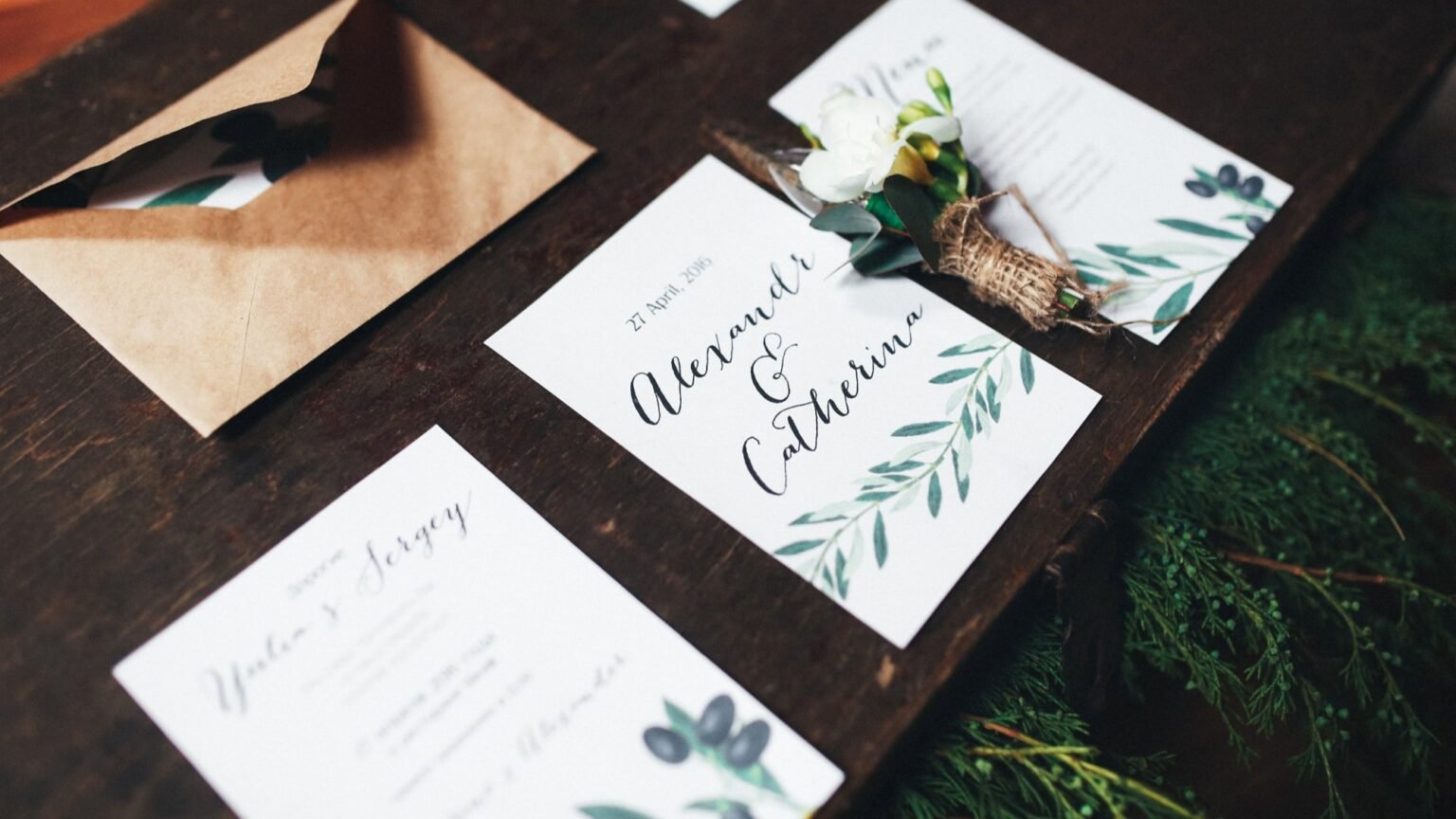
Paper invitations still matter, even if you also have a wedding website. The invitation sets the tone for the wedding ceremony and reception, while the rest of the invitation suite handles the overflow. When that balance is right, guests know where to be, what to wear, how to reply, and what matters most.
Wedding invitation dos and don’ts that actually matter
A lot of wedding invitation etiquette advice gets treated like sacred law. It is not. Proper wedding invitation etiquette is mostly about helping guests feel informed and welcomed. Some traditions are still useful. Some are optional. Some are worth keeping only if they fit your wedding.
So here are the essential guidelines I would actually follow.
Do send wedding invitations on a realistic timeline
For most weddings, six to eight weeks before the wedding is still a solid window for mailing wedding invites. That gives guests enough time to plan, and it gives you enough time to collect replies, chase down stragglers, and get your final head count in order before the big day.
If you are planning a destination wedding, inviting a lot of out of town guests, or getting married over a holiday weekend, earlier is smarter. That does not mean your formal invitations need to go out absurdly early. It does mean your save the date and wedding website should be working harder for you.
A simple way to think about timing is this:
- save the dates go early, especially for a destination wedding
- wedding invitations go later, once your core event details are actually set
- the RSVP deadline should leave you enough time to finalize meal counts, vendor numbers, and the seating chart without begging guests to reply while you are also trying to steam linen napkins and remember your vows
The mistake to avoid is mailing too soon because you are eager. If the reception location might change, hotel information is not ready, or the time of ceremony is still fuzzy, wait a little. An invitation is not the place for maybe.
And do not build your main invitation plan around a standby list. If you think you may need a second wave of invitations, leave yourself enough time to do it graciously. A standby list only works when guests still have enough time to make plans, not when the wedding day is practically next Tuesday.
Do keep the main invitation focused on the essentials
One of the most common mistakes in wedding planning is trying to make the main invitation carry the entire event. It should not.
The main invitation usually needs only the core facts:
- who is hosting or inviting
- the couple’s names
- the wedding date
- the time of the ceremony
- the venue name
- the city and state
- a short reception line, if needed
That is the backbone. Everything else belongs somewhere else.
If the ceremony and reception are at the same location, you may only need a simple line such as “Reception to follow.” If the ceremony and reception are in different places, or if the reception location needs its own explanation, then a reception card or details card makes sense.
And this is where couples often make life harder than it needs to be. Hotel information, travel arrangements, parking instructions, gift information, shuttle notes, welcome party details, rehearsal dinner details, maps, and the rest of the nitty gritty details do not all belong on the main invitation. They belong on a wedding website, a details card, or a separate insert card.
That is also true for wedding registry information. Traditional etiquette is still pretty clear here. Registry information should not be printed on the invitation itself. If you want to share registry information, a wedding website is the cleanest place for it. A details card can direct guests there if needed.
The same logic applies to your love story. It may be charming on a personal website or wedding website. It is usually not what your invitation card needs to be doing.
Do match wedding invitation wording and design to the actual event
Wedding invitation wording should sound like your wedding, not like a stranger borrowed a calligraphy set and started making decisions for you.
If you are hosting a black tie evening wedding in a church, more formal invitations and more traditional invitation wording can make perfect sense. If you are having a garden wedding with cocktail attire and a relaxed reception, your wording can be cleaner and more modern without becoming rude or sloppy.
Traditionally, formal weddings often include parents names in the host line. In very formal wording, the bride’s parents or both sets of parents may appear in full. If you are using that structure, make sure it reflects real hosting and still reads clearly. Do not cram in groom’s parents names, parents names, and every possible honorific just because a template once told the internet that was mandatory.
For example, a traditional version might look like this:
Mr. and Mrs. John Smith
request the pleasure of your company
at the marriage of their daughter
Olivia Smith
to
Daniel Carter
That still works. So does a cleaner modern version:
Together with their families
Olivia Smith and Daniel Carter
invite you to celebrate their wedding
Both are acceptable. The question is which one fits the event.
The design should follow the same rule. Wedding invitation design is not just decoration. It tells guests what kind of event this is. Formal weddings can support more traditional typography, refined spacing, and a quieter palette. A lighter, more contemporary celebration can lean simpler. But in both cases, clarity matters more than flourish. Good invitation design should help guests read the card without squinting like they are deciphering an antique treasure map.
Do tell guests about dress code clearly
Dress code is technically optional. In practice, it is often very helpful.
If the dress code is short and standard, put it right on the invitation or the details card. Black tie, formal attire, and cocktail attire are all easy for guests to understand. If the wedding attire needs explanation, then the wedding website is the better place for the fuller version.
For example:
- Black tie
- Cocktail attire
- Formal attire
- Garden attire
If your venue adds practical complications, say so. A lawn ceremony, beach event, mountain setting, or house of worship may create questions that the dress code alone does not answer. That is where a short note helps. Guests appreciate useful guidance. They do not appreciate being told to dress for “celestial vineyard elegance” and then being expected to solve the rest themselves.
A good rule is simple: if the note helps guests know what to wear, keep it. If it is only there to sound clever, cut it.
Do be exact about the guest list and addressing envelopes
This is one of those small details people forget until it suddenly matters.
Your guest list should be decided before the invitations are addressed, not while you are halfway through a box of envelopes. The names on the invitation tell people who is invited. That means you need to be clear about family members, children, additional guests, and plus ones.
If you are inviting a married couple, address both people. If you are inviting an unmarried couple who live together, list both names. If you are inviting children, include their names where appropriate. If you are not inviting children, do not assume guests will infer that from vibes. Help them out.
An inner envelope can make this easier. It is optional, not mandatory. But it is useful if you want to specify exactly which people in a household are invited. If you skip the inner envelope, the outer envelope has to do all the work.
This is also where proper titles matter. Use the names and titles your guests actually use. Be respectful. Be consistent. And proof the spellings carefully. Addressing envelopes is not glamorous, but it is one of the clearest places where thoughtfulness shows.
The same goes for the return address. Include it clearly. It saves confusion, helps with undeliverable mail, and keeps your paper invitations from disappearing into postal limbo if something goes wrong.
As for plus ones, proper etiquette is less mysterious than people make it sound. Spouses, fiancés, long term partners, and members of the wedding party should generally be treated generously. If someone is invited with a guest, say so clearly. If not, do not leave room for guesswork. “And Guest” means something. Do not use it accidentally.
Do make the RSVP process easy
If you want guests reply rates to be decent, do not make the response process annoying.
A response card works well because it gives guests a direct, obvious way to reply. If you are using mailed RSVP cards, a pre-addressed envelope is the polite move, and a stamped envelope is even better. That small convenience often matters more than people expect.
If you are using online RSVPs, make the RSVP instructions unmistakable. Put the wedding website where guests can find it easily. If the response method lives on a details card, say so clearly. If the site is essential for reply, do not bury it in six point type at the bottom of the suite and then act surprised when Aunt Linda calls your mother.
A strong RSVP setup usually includes:
- an RSVP date that is clear and easy to spot
- a simple yes or no response
- meal preferences, only if needed
- dietary restrictions, only if relevant
- one obvious method for replying
- a backup method if your guest list includes less tech-comfortable guests
In most cases, the RSVP deadline should land about three to four weeks before the wedding. That gives you enough time to follow up, lock the final head count, finalize catering numbers, and build the seating chart without turning the final stretch of planning into a hostage situation.
Do not ask for more information than you truly need. If guests need to choose an entrée, ask. If the caterer needs dietary restrictions, ask. If you are tempted to add three custom questions, a song request, a memory prompt, and a mini personality survey, maybe step away from the response card.
Do use the wedding website as support, not as an excuse
A wedding website is extremely useful. It can hold hotel information, travel arrangements, maps, registry information, timing updates, FAQs, and extra event details that would clutter the paper suite. For a destination wedding, it is especially helpful.
But a wedding website should support the invitation, not replace it entirely. Guests still need the basics in print. The invitation should tell them what the event is, when it is happening, and where to go. The website can handle the rest.
A good website is especially helpful for:
- hotel information
- travel arrangements
- RSVP instructions
- dress code explanation
- weekend schedule
- maps and parking
- gift information and registry information
- updates after the invitations are printed
Create the site before your save the dates go out if possible. That way you can direct guests there early, especially out of town guests. And keep the site practical. A personal website can absolutely include a few more personal touches, but it does not need to read like a memoir to be useful.
Do think about mailing before you fall in love with embellishments
There is nothing wrong with wanting pretty mail. There is something wrong with designing an invitation suite that the post office hates.
Wax seals, ribbon, belly bands, thick paper, envelope liners, square envelopes, layered pieces, tissue paper, and heavily wrapped suites can all affect postage, machinability, or both. That does not mean you cannot use them. It means you need to test them in the real world.
Bring one fully assembled invitation to the post office and have it weighed. Ask whether it needs extra postage. If the envelope is rigid, lumpy, square, or unusually shaped, assume nothing. Mailing is one of those areas where optimism is not a strategy.
If you want a polished look without unnecessary postal drama, focus on what guests will actually notice: clear print, nice paper, a readable layout, and a well organized suite. A clean invitation with a thoughtful design usually lands better than a needlessly complicated one that arrives torn, crushed, or postage-due.
And if you are set on decorative touches, mail one test piece to yourself first. That is one of the most useful wedding invitation dos and don’ts on the list.
Do proof everything, then proof it again
Before anything goes to print, check every line like it matters, because it does.
At minimum, proof:
- names
- wedding date
- time of ceremony
- venue spelling
- reception location
- mailing address
- return address
- RSVP date
- website URL
- dress code
- hotel block dates, if listed
- any separate event details
Then have at least one other person proof it too. A fresh set of eyes catches things you no longer see.
This is also the stage where you should manually sort your entire guest list and make sure each invitation suite matches the correct household. That means the right invitation, the right response envelope, the right insert pieces, and the right names on the envelope. It is a little tedious. It is also much less tedious than realizing a close friend received the wrong reception card or that one household got a details card for an event they were never invited to.
Good proofreading is not fussy. It is kind. It is one of the easiest ways to protect your special day from avoidable confusion.
Final thought
Most wedding invitation dos and don’ts are really about one thing: make it easy for guests to understand your event.
Send the invitation with enough time. Keep the main card focused. Match the wording and design to the actual wedding. Tell people clearly if the dress code is black tie or cocktail attire. Be precise about the guest list. Make it simple to reply. Use the wedding website for the overflow, not for everything. And check your mailing plan before you commit to an envelope that needs its own engineering degree.
That is proper etiquette in the version that matters most. Clear, gracious, and useful.
FAQs
Is it okay to put wedding registry information on the invitation?
Traditionally, no. The cleaner option is to put registry information on your wedding website and direct guests there if needed. A details card can point guests to the site, but the main invitation should stay focused on the event itself.
Do I need an inner envelope?
No. An inner envelope is optional. It can be helpful when you want to clarify exactly who in a household is invited, especially children, but plenty of modern invitation suites work perfectly well without one.
What should the RSVP date be?
In most cases, set the RSVP date about three to four weeks before the wedding. That usually gives you enough time to follow up, get a final head count, and complete your seating chart.
Should I put dress code on the main invitation or the wedding website?
If the dress code is short and standard, putting it on the main invitation or details card works well. If it needs explanation, the wedding website is usually the better place for the fuller note.
If the ceremony and reception are at the same location, do I need a reception card?
Usually not. A short line like “Reception to follow” is often enough. A separate reception card is more helpful when the reception is at a different venue or needs additional directions or timing details.