
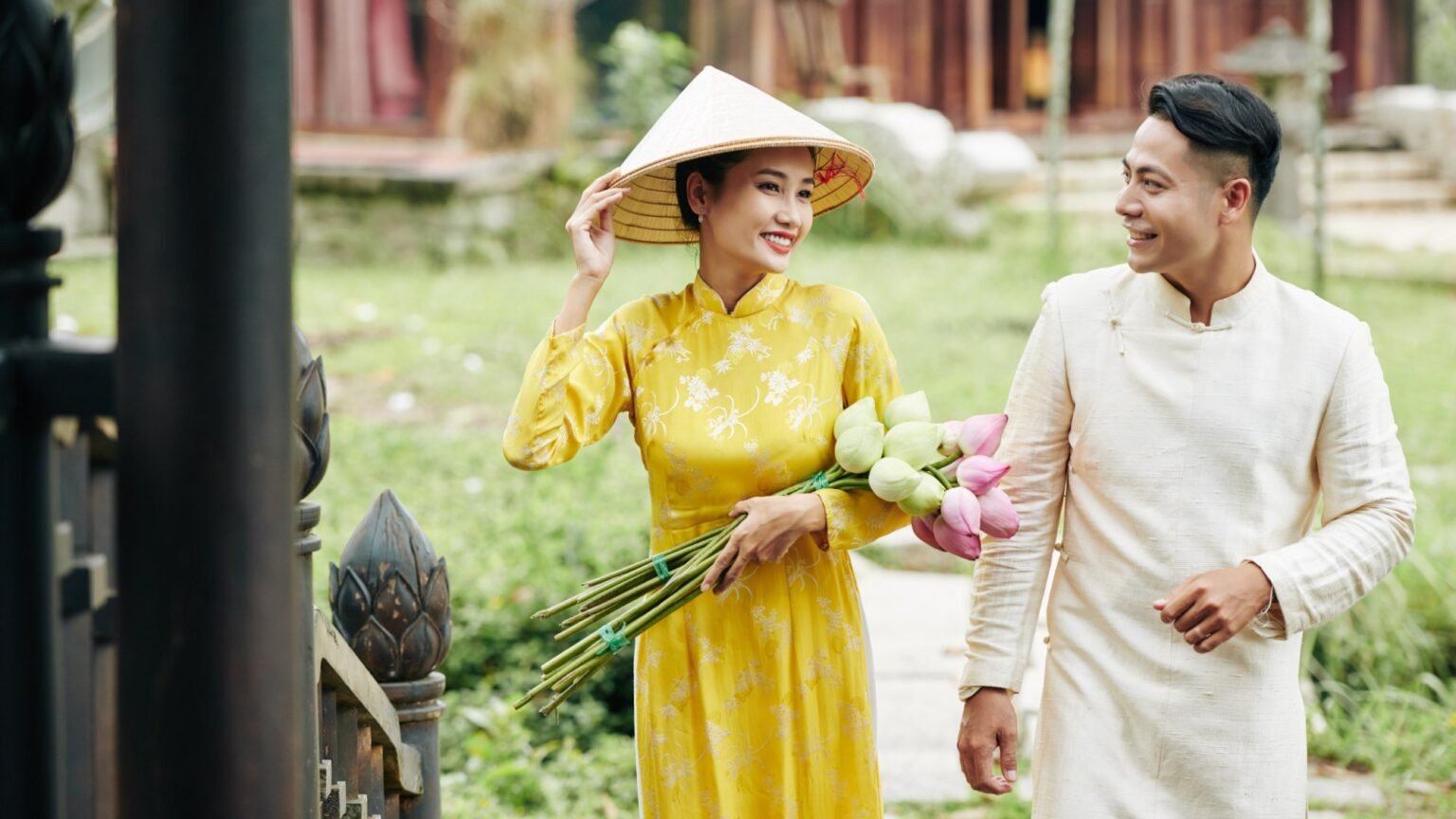
TLDR
- The best way to choose an Ao Dai for a wedding is to start with your role. A bride, groom, bridesmaid, and guest should not all shop the same way.
- Traditional styles usually suit tea ceremonies and more formal family events. Modern styles work well for fusion weddings, receptions, and couples who want a more personalized look.
- Fabric matters more than people expect. Silk, brocade, chiffon, lace, and velvet all change the feel, movement, and level of formality.
- Fit is the real dealbreaker. A beautiful Ao Dai that pulls at the shoulders or feels tight at the collar will not feel beautiful for long.
- If you are ordering online, made-to-measure is often worth it, especially if you are between sizes or want a cleaner, more flattering result.
If you are trying to figure out how to choose the perfect Ao Dai for a wedding, start with the part most people skip. The right Ao Dai is not just the one that looks best in a product photo. It is the one that fits your role in the wedding, the type of ceremony, the expectations of the family, and the amount of movement you will actually need on the day.
That matters because an Ao Dai, or áo dài, is a very specific garment. It is tailored, elegant, and structured in a way that shows every decision very clearly. The fabric changes the drape. The collar changes the comfort. The slit placement changes how it moves. And the color can carry cultural meaning, especially at a Vietnamese wedding.
Start with your role in the wedding
The first answer to how to choose the perfect Ao Dai for a wedding is simple: do not shop as if every role has the same rules.
If you are the bride
Brides usually have the most freedom, but also the most symbolism to consider. Traditionally, red is a classic bridal choice because it is associated with luck, joy, and prosperity. Gold embroidery, beading, and symbolic motifs can make that look feel especially ceremonial. White is also a popular choice now, especially for Vietnamese American weddings or fusion celebrations. Soft blush, champagne, cream, green, and pastel tones can also work beautifully in a more modern setting.
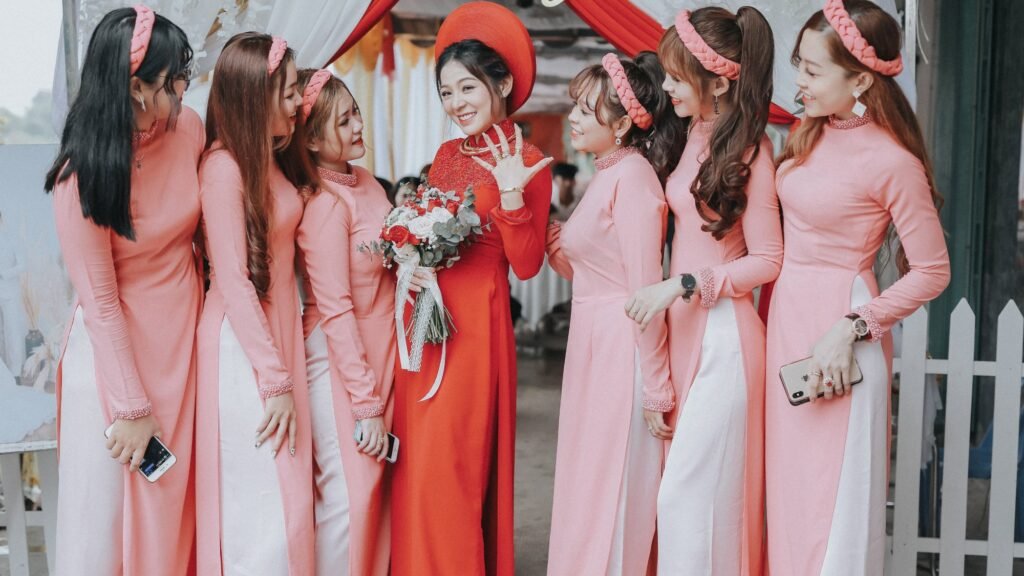
If your wedding includes a tea ceremony, family elders, or a more traditional structure, this is often the place to lean more classic. A high collar, longer sleeves, richer fabric, and more formal detailing usually feel appropriate. If you are planning a later reception with a different mood, you can always change into a lighter Ao Dai or into a different dress altogether.
If you are the groom
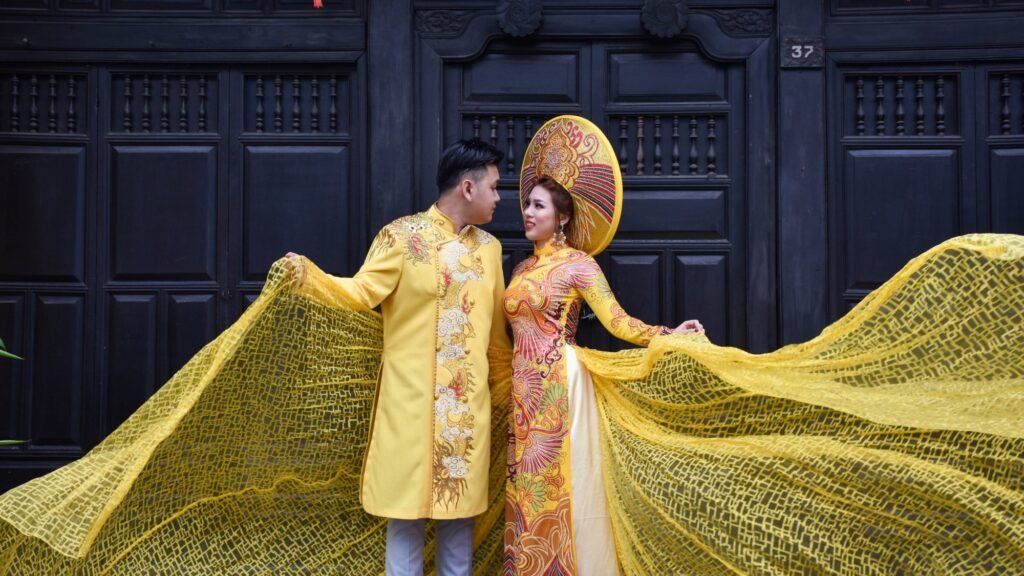
Grooms can also wear an Ao Dai, often in a coordinated look that echoes the bride’s color story or embroidery motifs. If the bride is wearing a richly detailed ceremonial style, the groom’s look can complement it without copying it exactly. Pay special attention to shoulder room, sleeve comfort, and ease through the torso. If you will be greeting family, standing for long periods, or moving table to table, comfort matters just as much as appearance.
If you are in the wedding party
Bridesmaids and groomsmen usually follow the couple’s direction. In many weddings, the couple will choose a specific color family or matching group look. This is not the time to outshine the bride or improvise your own interpretation of the palette. If you are buying your own piece, ask for exact color guidance, fabric direction, and whether the event is leaning more traditional or more modern.
Bright yellow, pink, blue, and other celebratory colors are often used for the wedding party because they coordinate well with the bride while still feeling festive.
If you are a guest
Guest etiquette is the clearest place where color matters. Traditionally, guests should avoid red and white, since those shades are often associated with the bride. Black is also often avoided because of its connection to mourning. Safer guest choices include green, blue, yellow, and softer celebratory tones.
That said, modern weddings are not all identical. If the couple has given a dress code, a color palette, or specific attire notes, follow that first. Tradition matters, but so does the actual guidance from the people getting married.
Traditional or modern? Let the ceremony decide
A lot of people make this harder than it needs to be. If you are unsure whether to go traditional or modern, let the ceremony answer for you.
A traditional bridal Ao Dai typically features a high neckline, long raglan sleeves, a long fitted tunic, and a more modest, elegant silhouette. Silk or brocade is common. The overall effect is polished and formal.
A modern Ao Dai can include softer necklines, lighter fabrics, illusion details, personalized embroidery, detachable layers, or a more fashion-forward shape. Some modern versions are easier to move in and feel more natural in a fusion wedding or contemporary reception setting.
A good working rule looks like this:
- For a tea ceremony or elder-centered family event, lean more traditional.
- For a reception, destination wedding, or mixed-culture celebration, modern can make more sense.
- If you only want one Ao Dai for the whole day, choose a classic shape in a lighter fabric with manageable embellishment.
That is often the clearest way to solve the question of how to choose the perfect Ao Dai for a wedding without overthinking every single detail.
Choose fabric based on formality, weather, and movement
Fabric is not a secondary decision. It is one of the main reasons an Ao Dai either feels graceful or frustrating.
Silk
Silk is the classic choice for a reason. It has a soft sheen, elegant movement, and a polished look that suits formal ceremonies very well. If you want the garment to feel refined and traditional, silk is usually a strong place to start.
Brocade
Brocade has more structure and visual richness. It works especially well for ceremonial looks, traditional red and gold color stories, and ornate embroidery. It tends to feel dressier and more formal than a simpler silk.
Chiffon and lace
Chiffon creates softness and movement. Lace overlays add romance and texture. These are useful if you want an airy, lighter-feeling bridal look, especially for warmer weather or a more contemporary style.
Velvet
Velvet is richer, heavier, and better suited to cooler weather or evening events. It can look incredibly elegant, but it is not the most practical choice for a hot daytime ceremony.
A simple rule here is that a slightly simpler design in the right fabric often looks better than a heavily embellished design in the wrong one.
Fit matters more than trend
Because the Ao Dai has a slim, tailored silhouette, fit is not optional. It is the whole point.
This is why off-the-rack shopping can be harder than people expect. A standard size might look close enough online, but still pull at the bust, twist at the hip, or feel restrictive when you raise your arms. That is why made-to-measure is often the smartest option, especially if you are petite, tall, curvy, broad-shouldered, fuller-busted, or between sizes.
When ordering custom, expect to provide more information than a typical dress size. Many makers ask for bust, waist, hips, shoulder width, height, shoe height, sleeve measurements, and photos. Measurements are often requested in centimeters. You should usually measure while wearing the shoes and undergarments you plan to wear with the outfit, and it is best if another person helps.
Even with custom sizing, leave room for minor local alterations. That is normal. A near-perfect fit from an online tailor can still benefit from a final adjustment once the piece is on your body.
A practical fit checklist
Before you keep an Ao Dai, check these five things:
- You can breathe, speak, and turn your head comfortably at the collar.
- You can lift your arms naturally without strong pulling through the shoulders or underarm.
- The tunic skims the body cleanly instead of clinging too tightly.
- The side slits feel elegant when walking and still feel secure when sitting.
- The hem works with the shoes you will actually wear.
If one of those is off, the garment may still photograph well standing still, but it will not feel right through a real wedding day.
Use body shape guidance, but do not treat it like law
Body shape advice can help, but it should stay in its proper place. It is guidance, not a sentence.
In general, petite frames often look good in styles that add a little softness or visual depth, such as light embroidery, layered fabrics, or sleeves with subtle shape. Curvier figures often benefit from structured fabrics and clean vertical lines. Taller wearers can carry long, traditional cuts especially well. Fuller busts or broader shoulders often benefit from a little more ease through the top and a neckline that feels balanced rather than severe.
But the real goal is not to “correct” your body. The goal is to choose a garment that follows your body well. A good Ao Dai is not supposed to make you look like somebody else. It is supposed to make you look like yourself, just more intentional.
Choose color with both etiquette and personal taste in mind
Color is one of the easiest ways to get this right, or accidentally get it wrong.
If you are the bride, red is the most traditional choice, and white is a common modern choice. Pastels and other softer tones can also work beautifully, especially in contemporary weddings.
If you are in the wedding party, coordinate with the couple rather than improvising.
If you are a guest, avoid red, white, and usually black unless the couple has clearly said otherwise.
After etiquette, think about the practical side. Ask yourself whether you want your Ao Dai to read as rich and ceremonial, soft and romantic, or clean and modern. Deep jewel tones often feel formal and photograph well. Soft shades can be beautiful, but they usually look best when the fabric and fit are strong.
If you are ordering online, give yourself more time than you think
This is one of those details people regret ignoring.
If you are buying online, especially custom, give yourself enough time for production, shipping, and at least one round of alterations if needed. Do not plan around a delivery window that leaves you with no margin. Wedding clothing is not the place to discover your risk tolerance.
Before ordering, confirm:
- whether pants and headpiece are included
- what measurements are required
- whether the seller offers fabric photos or swatches
- whether custom orders can be altered or remade
- how long production and shipping usually take
- whether you will need a second look for another part of the day
Let your Ao Dai and invitations make sense together
This is the part people often miss, and it is worth getting right.
If your wedding includes a tea ceremony, a reception, or multiple dress expectations, explain that clearly to guests. A matching set of wedding details cards can carry attire notes, extra locations, and timing without crowding the main invitation.
And if your Ao Dai is helping shape the overall wedding look, let the paper reflect that same direction. A red-and-gold ceremonial palette usually suits a more formal invitation style. A soft ivory or blush modern Ao Dai may pair better with a cleaner, lighter suite. If you are still choosing the paper itself, the best place to start is the wedding invitations collection.
The goal is not to make everything match in an obvious way. The goal is to make the wedding feel coherent.
FAQs
Can a wedding guest wear a red Ao Dai?
Traditionally, no. Red is closely associated with the bride and with celebration symbolism, so guests usually choose another color unless the couple specifically invites or approves it.
Is made-to-measure worth it for an Ao Dai?
In many cases, yes. Because the silhouette is so tailored, custom sizing is often worth the extra effort, especially if you are between sizes or want a cleaner, more comfortable fit.
Should I choose a traditional or modern Ao Dai?
Choose based on the ceremony. Traditional styles usually make more sense for tea ceremonies and formal family events. Modern styles work well for receptions, fusion weddings, and brides who want more personalization.
What is the best fabric for a summer wedding?
Lighter silk, chiffon, or other breathable fabrics usually make the most sense. Brocade and velvet can be beautiful, but they are often better for cooler weather or more formal indoor events.
Can I wear an Ao Dai for only one part of the wedding?
Yes. Many people wear an Ao Dai for the tea ceremony or formal cultural portion, then change later for the reception. That is a very practical option if you want both tradition and easier movement.