
TLDR
- Editable templates are best for people who want the lowest upfront cost and do not mind handling the last mile themselves.
- Ordering custom printed invitations online usually makes more sense if paper quality, proofing, timing, and mailing reliability matter.
- The real choice is not just “template vs printer.” It is “design file only vs managed finished product.”
- For weddings and other important events, the calmer option is often the one that removes more variables.
There is a reason editable invitation templates are so tempting. They look inexpensive, fast, and flexible. You buy a design, type in your details, and imagine yourself basically done. Sometimes that is true. Sometimes it is the beginning of a surprisingly annoying little side job involving printer settings, paper testing, trimming, envelopes, and a mild crisis over whether the navy text is reading as elegant or just blurry. Brides notes that DIY invitations require checking what paper weights your printer can actually handle before you buy supplies in bulk, which is one of those small facts that becomes important exactly when you hoped it would not.
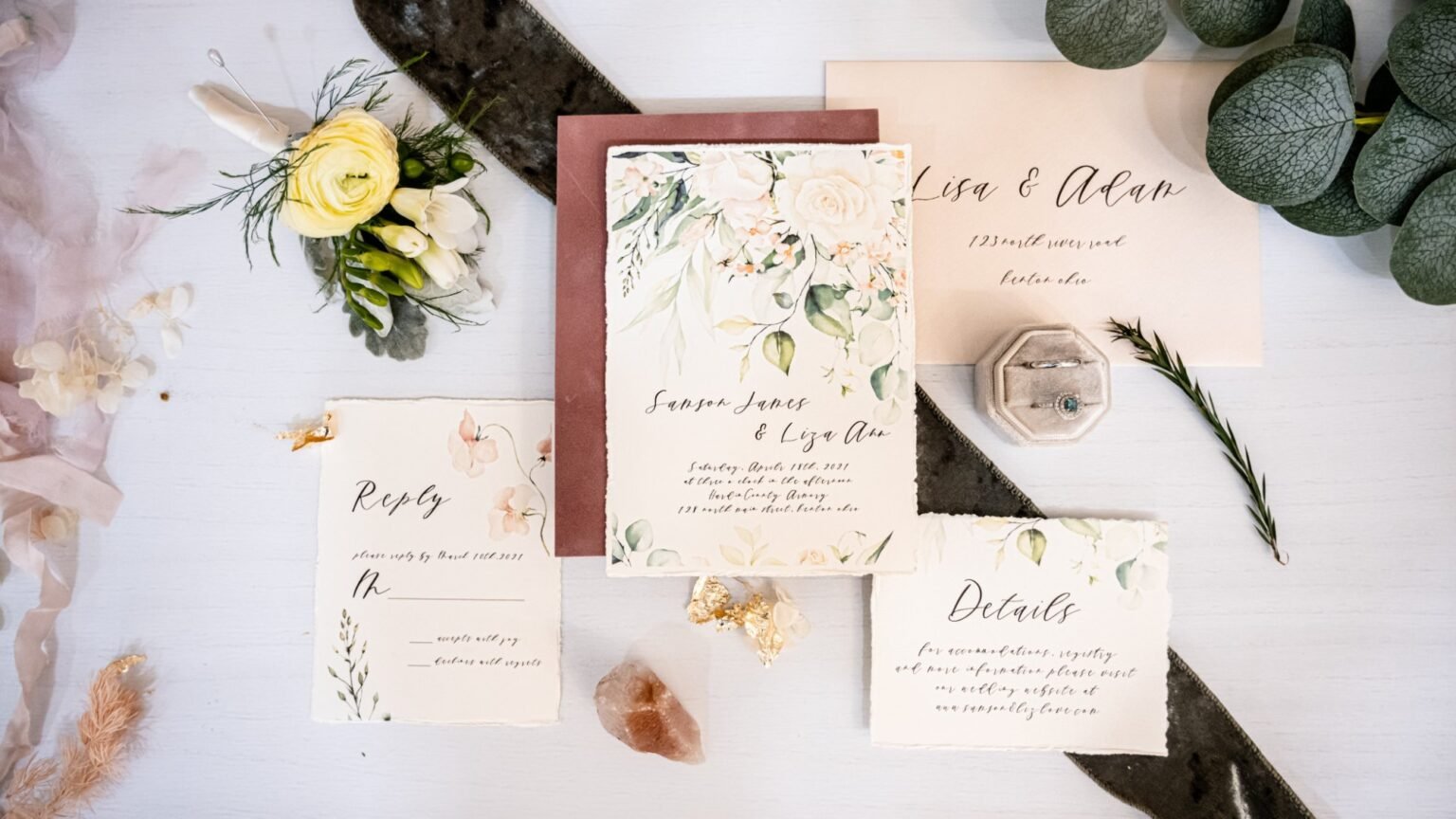
That is why the better question is not “Which option is cheaper?” The better question is “Which option fits the kind of event I am sending these for, and how much production work do I want to own myself?” If you are hosting a casual shower, birthday dinner, or small event and you are comfortable doing design cleanup and print troubleshooting, editable templates can be a smart choice. If you are sending wedding invitations or anything where paper feel, print clarity, proofing, and mailing confidence matter, ordering through a service that will actually print invitations online is often the more practical decision. PrintInvitations, for example, currently emphasizes free digital proofs, HP Indigo printing, and fast turnaround rather than just selling a file and wishing you luck.
What you are really buying with an editable template
An editable template is usually a design file and a license to customize it. That can be a very good deal. You get control over the wording, the pace, and often the cost. Platforms like Adobe Express and Canva both promote invitation templates that can be customized online, and both also offer printing services, which tells you something important: the design step is only one part of the job. The actual production still has to happen somewhere, whether that is at home, through a big platform, at a local shop, or through an invitation printer.
Template buyers usually do best when they already know what they want, are comfortable making layout choices, and are not too precious about tiny print differences. If your event is small, your design is simple, and you are okay with a “good and done” result instead of a “carefully printed and proofed” result, this route can work well.
But the file-only model pushes a lot of invisible responsibility onto you. You become the person checking whether the text is centered correctly, whether the trim is clean, whether the paper looks cheap, whether the envelopes fit, whether the home printer is streaking, and whether the finished piece still qualifies as normal mail. USPS rules for letter-size mail are more specific than many people expect, with standards for size, thickness, rectangular shape, and other physical requirements. Decorated or irregular mail can also need different handling.
That does not mean editable templates are bad. It means they are only as simple as the rest of your production plan.
What you are buying when you order printed invitations online
When you order through an online invitation printer, you are usually paying for fewer failure points. That includes paper options, printing, cutting, proofing, and shipping, all bundled into one workflow. The useful part is not just convenience. It is predictability.
PrintInvitations, for instance, currently says every order includes a free digital proof, physical proofs or samples are available for a fee, and most orders are produced in three business days or less, with many shipping within one business day. That kind of process matters because invitation problems rarely come from the big idea. They usually come from the small details: the typo no one saw, the address line that wrapped awkwardly, the paper that felt thinner than expected, or the rushed printing decision that created stress two weeks before mailing.
There is also the print quality question. If the design depends on subtle color, fine text, or delicate artwork, production matters. PrintInvitations says it uses HP Indigo printing for sharp detail, smooth color, and clean finishing. Whether you use that company or another one, that is the kind of difference that separates “I bought a file” from “I received a finished product that looks intentional in person.”
In other words, the online printing route is not only about outsourcing labor. It is about reducing the number of judgment calls you have to make under pressure.
The five tradeoffs that actually matter
1. Cost
Templates often look cheaper at first because the file price is low. But your real cost can include paper, printer ink, test prints, trimming tools, envelopes, postage surprises, and your own time. Brides notes that DIY invitation projects can save money, but they also require the right printer, the right paper, and testing. That is perfectly reasonable for some people and deeply unappealing for others.
2. Time
Templates can be fast if you are decisive and experienced. They can also become a slow-motion project if you keep revising the wording, comparing paper, or reprinting after a mistake. Ordering printed invitations online can shorten that process because the production path is already defined. That is one reason large platforms and dedicated invitation printers both emphasize print-and-deliver workflows, not just template editing.
3. Quality
Guests may not know printing terminology, but they can tell when a piece feels substantial and reads clearly. Brides’ reporting on printing Etsy invitations includes a designer recommendation to use at least 17-point cardstock for a nicer feel, and Paper Source likewise describes heavier paper as more luxurious. That does not mean every event needs thick paper. It does mean print choices affect the result in ways people notice immediately, even if they never say the phrase “cover weight” out loud.
4. Proofing
This is the quiet separator between the two routes. With a file-only purchase, you are the proofing department unless you hire someone else. With a managed printer, the review process is usually built in. PrintInvitations highlights free digital proofs on every order, which is exactly the kind of operational detail that sounds boring until it saves you from mailing “Saturday, June 28” when the wedding is on Friday, June 27.
5. Mailing risk
Invitation mailing is where many DIY plans become unexpectedly expensive. USPS standards can affect what counts as normal letter mail, and decorated envelopes with exposed wax seals, strings, or ribbons may require extra handling or even an outer envelope. Irregularly sized pieces such as square invitations can also require nonmachinable postage. If your design is simple and rectangular, this is manageable. If it is decorative, thick, bulky, or unusual in shape, the risk goes up.
Who should buy editable templates
Editable templates are usually a good fit if most of the following are true:
You have a small guest list. Your design is visually simple. You are comfortable making wording and layout decisions. You already have a printing plan. You are not using bulky embellishments. And you do not mind testing paper or redoing a few things.
This route also makes sense when the invitation is not the centerpiece of the event. Not every invitation needs to feel like an heirloom. Some just need to look good, communicate clearly, and get mailed on time.
Who should order custom printed invitations online
The handled route is usually better if the event is more formal, the guest list is larger, or you care about the tactile side of the finished piece. Weddings especially tend to push people toward managed production, because the invitation has a real job to do. It sets tone, carries important information, and often becomes one of the first physical objects guests encounter from the event.
If that matters to you, it usually makes sense to choose a provider that includes proofing, paper options, and actual production in the process. It is not the cheapest possible path. It is often the most controlled one.
The simplest decision rule
Here is the cleanest rule I know.
Buy an editable template when you want a design file and are comfortable becoming the project manager for everything that happens after.
Order custom printed invitations online when you want the finished piece, not the side quest.
That sounds almost too simple, but it is the real distinction. People rarely regret having fewer invitation variables to manage.
FAQs
Are editable templates always cheaper than ordering printed invitations online?
Not always. The file price is usually lower, but paper, printing, proofing mistakes, postage issues, and your own time can narrow the gap.
Can I get high-quality results from an editable template?
Yes, especially if you use a good printer or professional print shop, choose the right paper, and keep the design straightforward. The challenge is that you are responsible for coordinating those pieces.
When does ordering printed invitations online make the most sense?
Usually when the event is important enough that proofing, paper feel, print clarity, and timing matter more than saving the last possible dollar.