
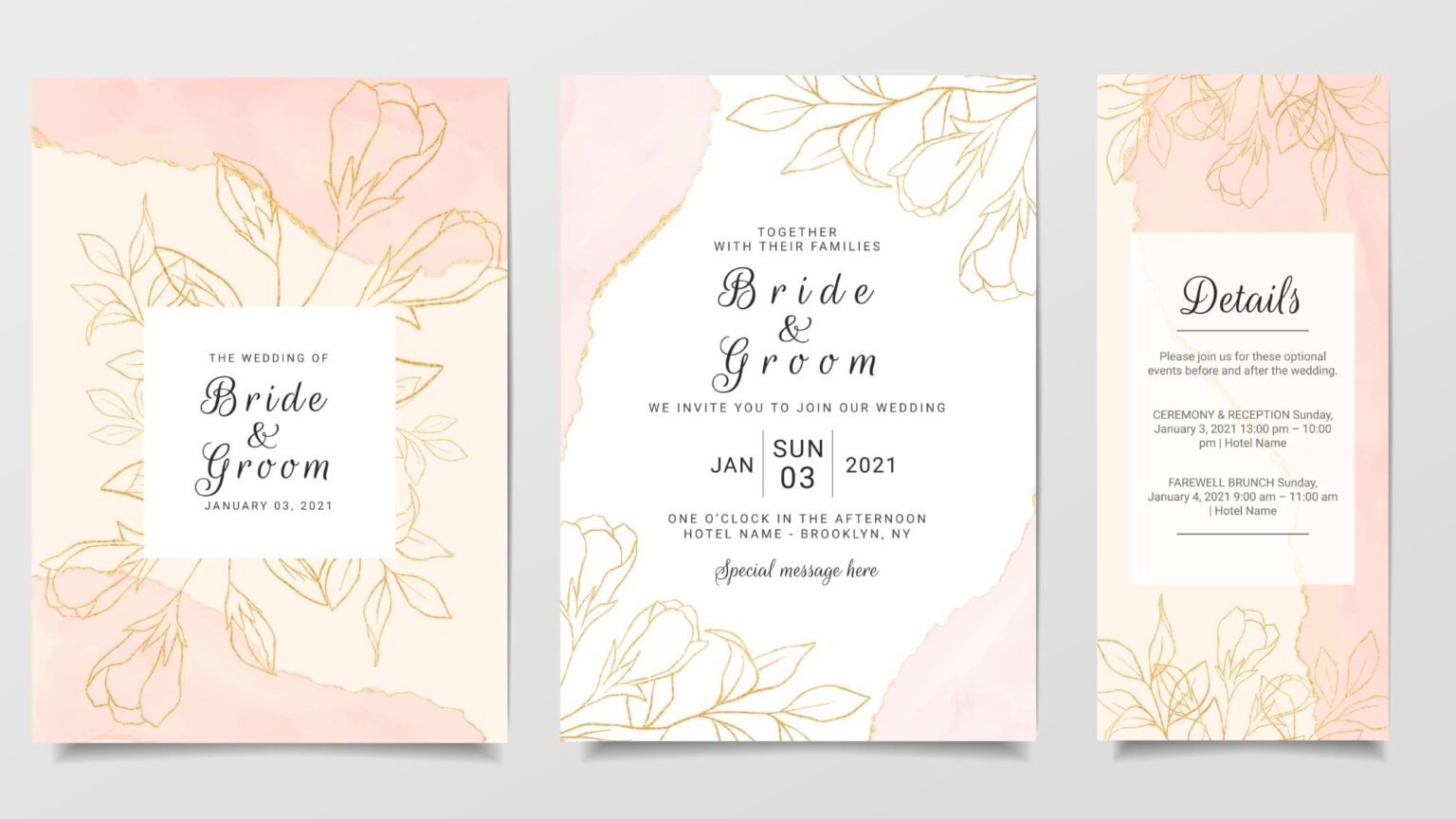
TLDR
- Casual wedding invitation wording should sound relaxed, clear, and polished, not vague or overly cute.
- You can usually skip titles, use simpler request lines, and write the date and time in a more natural way.
- The essentials still matter: who is getting married, when, where, and how guests should RSVP.
- Extra details like dress code, travel notes, or your wedding website can live on a details card or website instead of crowding the main invitation.
- The best wording sounds like you, just a little more edited.
Casual wedding invitation wording works best when your wedding feels relaxed, modern, outdoorsy, intimate, or simply less formal by nature. It gives you room to sound like actual people instead of a committee from another century.
That does not mean anything goes. Casual wedding invitation wording still has a job to do. Guests need clear information, a readable layout, and a tone that matches the event. You are aiming for warm and easy, not confusing and improvised.
What makes wedding invitation wording feel casual
Traditionally, formal invitations lean on full names, titles, fully spelled-out dates, and more traditional request lines. Casual wording gives you more flexibility.
In most cases, casual wording looks like this:
- shorter, friendlier request lines
- fewer titles, or no titles at all
- first names only, or first and last names without formal prefixes
- numerals for the date and time
- a simpler reception or RSVP line
- a wedding website or online RSVP option if that fits your setup
So instead of:
“Mr. and Mrs. Robert Ellis request the pleasure of your company…”
you might say:
“Please join us to celebrate…”
Or even:
“Join us for the wedding of…”
That shift alone does a lot of the work.
Casual does not mean careless
This is the part people sometimes miss.
A casual invitation can absolutely be warm and personal, but it still needs to cover the basics. Guests should not have to piece the event together from clues like they are solving a low-stakes mystery in nice shoes.
Your invitation should usually include:
- the couple’s names
- the wedding date
- the ceremony time
- the venue name
- the city and state
- reception information, if needed
- RSVP instructions, either on a card or through your website
Dress code is optional. If it is simple, you can include a brief line on the invitation. If it needs explanation, it is usually cleaner to put it on a details card or your wedding website.
A simple formula for casual wedding invitation wording
If you want a clean structure, use this:
Opening line
Invite guests in a relaxed but clear way.
Couple’s names
Use first names only, or full names if you want a little more structure.
Date and time
Use numerals if you want a more modern, casual look.
Venue
Include the venue name, city, and state. Add the street address if needed.
Reception or RSVP line
Tell guests what happens next and how to respond.
That gives you a solid invitation without making it sound stiff.
Casual wedding invitation wording examples
Here are a few versions that work for different kinds of weddings.
Simple and polished
Please join us to celebrate the wedding of
Emma Collins and Noah Reed
Saturday, September 12, 2026
at 5:00 PM
The Willow House
Boulder, Colorado
Dinner, drinks, and dancing to follow
Please RSVP by August 14
This works well if you want the tone relaxed but still clean and classic.
Together with their families
Together with their families
Olivia and Mason
invite you to celebrate their marriage
Saturday, May 23, 2026
at 4:30 PM
The Greenhouse at Prospect
Nashville, Tennessee
Reception to follow
This is a good middle ground. It feels warm and modern without sounding overly informal.
Backyard or garden wedding
We’re getting married
and we’d love to celebrate with you
Harper and Jack
June 20, 2026
at 6:00 PM
at the home of Sarah and David Bennett
Asheville, North Carolina
Dinner under the trees to follow
RSVP at our wedding website by May 22
This version fits a relaxed outdoor wedding and sounds personal without getting sloppy.
Daytime or brunch wedding
Please join us for the wedding of
Lena and Marcus
Sunday, August 9, 2026
at 11:00 AM
The River Club
Savannah, Georgia
Brunch reception to follow
Short, direct, and easy to read. That is often the better choice.
Weekend or destination wedding
Join us for a weekend of celebration
as Sofia and Daniel get married
October 3, 2026
at 5:30 PM
Harbor Point
Newport, Rhode Island
For travel details and RSVP, please visit our wedding website
This works when your main invitation needs to stay clean and the extra logistics live elsewhere.
How to make it feel personal without overdoing it
A little personality helps. Too much personality can make the invitation harder to read.
Good ways to personalize casual wording:
- use a request line that sounds natural to you
- match the tone to the setting
- include a brief reception line that reflects the day
- make the RSVP wording slightly more playful if you want
For example, your RSVP card can be a little looser than the main invitation. A main card might stay simple, while the response card says something like:
- “Joyfully attending”
- “Sorry to miss it”
- “RSVP by June 1”
That is usually enough. You do not need every line to perform.
Common mistakes with casual wedding invitation wording
Being too casual for the actual event
If the wedding is black tie, held in a cathedral, or otherwise formal in tone, extremely relaxed wording may feel mismatched. You do not have to go fully traditional, but the invitation should still make sense for the event.
Crowding the main invitation
Travel notes, hotel blocks, long dress code explanations, registry references, and weekend schedules can overwhelm the design fast. Keep the main card focused. Put the extras on a details card or website.
Using inside jokes instead of useful information
A small personal touch is fine. But the invitation still needs to communicate clearly. If a guest has to ask three follow-up questions, the wording was charming but not effective.
Forcing formality you do not actually want
This one happens a lot. Couples choose very formal wording because it feels “more wedding,” then the whole invitation sounds unlike them. A cleaner, more natural line is often the better choice.
Casual vs formal, where to draw the line
You do not have to choose between stiff and sloppy. There is a wide middle ground.
A good rule is this:
- If your wedding is relaxed, your wording can be relaxed.
- If your wedding is formal, your wording should carry a little more structure.
- If your style is modern but polished, keep the language simple and the layout clean.
In other words, casual is a tone decision, not a permission slip to leave out important details.
One practical recommendation
If you are unsure how casual to go, keep the main invitation straightforward and let the supporting pieces carry a little more personality.
That often looks like this:
- clean main invitation
- slightly warmer details card
- simple online RSVP
- more personality on your website or RSVP card
It keeps the invitation readable and still lets the whole suite feel like you.
FAQs
Can I use first names only on a casual wedding invitation?
Yes, in many cases. First names often work well for casual wedding invitation wording, especially if the guest list knows you both well. If you want a little more structure, use first and last names without formal titles.
Is it okay to use numerals for the date and time?
Yes. Formal invitations usually spell everything out. Casual and modern invitations often use numerals, which can feel cleaner and easier to read.
Do we need an RSVP card if guests are replying online?
No. You can direct guests to a wedding website or provide another response method. Just make the reply-by date clear.
Should the dress code go on the invitation?
A short dress code line can go on the invitation if needed. If it requires explanation, it is usually better on a details card or your website.
Can casual wording still work for a religious ceremony?
Yes. But if the ceremony is more traditional, you may want slightly more structured language even if the overall tone stays warm and modern.